
The Man behind Root
"Better that ten innocent men be convicted than that one guilty man goes free"

The letters of Henry Root never fail to send tears of laughter down these aged cheeks. I read the first collection in the early 80s. I read it again in the autumn of 2024 and it smote me once again. The man behind Root was an intriguing character and the biography by his friend and collaborator Terence Blacker is an absorbing read. The rather clumsy title of the biography is: You Cannot Live as I Have and not End up Like This: The thoroughly disgraceful life & times of Willie Donaldson.
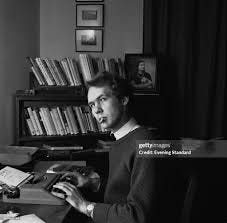
William Donaldson managed to squander several inheritances and was skilled at turning success into failure, snatching defeat from the jaws of victory. His father had died, an alcoholic, in 1957, leaving Willie £175,000, a fortune in those days (his mother had died in a motor accident two years earlier). He was not suited to conventional employment. On graduation from Oxford, Donaldson joined Ogilvie and Mather but resigned two days later after being asked to write a commercial for Ovaltine. After leaving advertising, he bought a theatrical company - "in order to audition actresses" - and became an impresario.
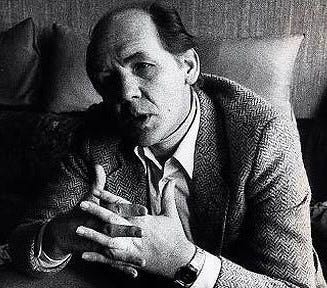
To quote Blacker: “From the mid1980s there had been a crack habit to maintain and, with it, a series of doomed, obsessive liaisons, bringing him into close contact, professional and personal, with dealers, ex-cons, users and tarts.”
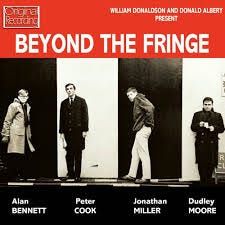
William Donaldson first came to my attention when he produced Beyond the Fringe, the groundbreaking satirical revue which made stars of Peter Cook, Dudley Moore, Jonathan Miller and Alan Bennett. He was also the first promoter to arrange a Bob Dylan concert at a time when the singer was barely known in Britain. "He [Dylan] was sitting in my office one day when I came back from lunch," Donaldson recalled. "I couldn't get rid of the fucker." Later, I avidly read (but was somewhat puzzled by) a column Donaldson wrote in the Saturday edition of the Independent newspaper.
What I did not know until I read Blacker’s book was that Donaldson was once the lover of the actress Sarah Miles, at the same time she was having an affair (once or twice a week) with Laurence Olivier with whom she had appeared in the 1962 movie Term of Trial. (I saw that film at the cinema. It also featured a very young Terence Stamp.) After a six-month affair with a dancer who had appeared with Cliff Richard in Summer Holiday, Donaldson spent two years with Sarah Miles and moved into her flat. When she was away filming in Ireland, he invited a "page three model" round, who left her shoes behind. When Sarah Miles found them, she kicked Donaldson out. Later, she wrote a memoir in which she described Donaldson "adjusting his cufflinks" as he seduced her.
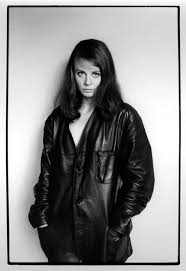
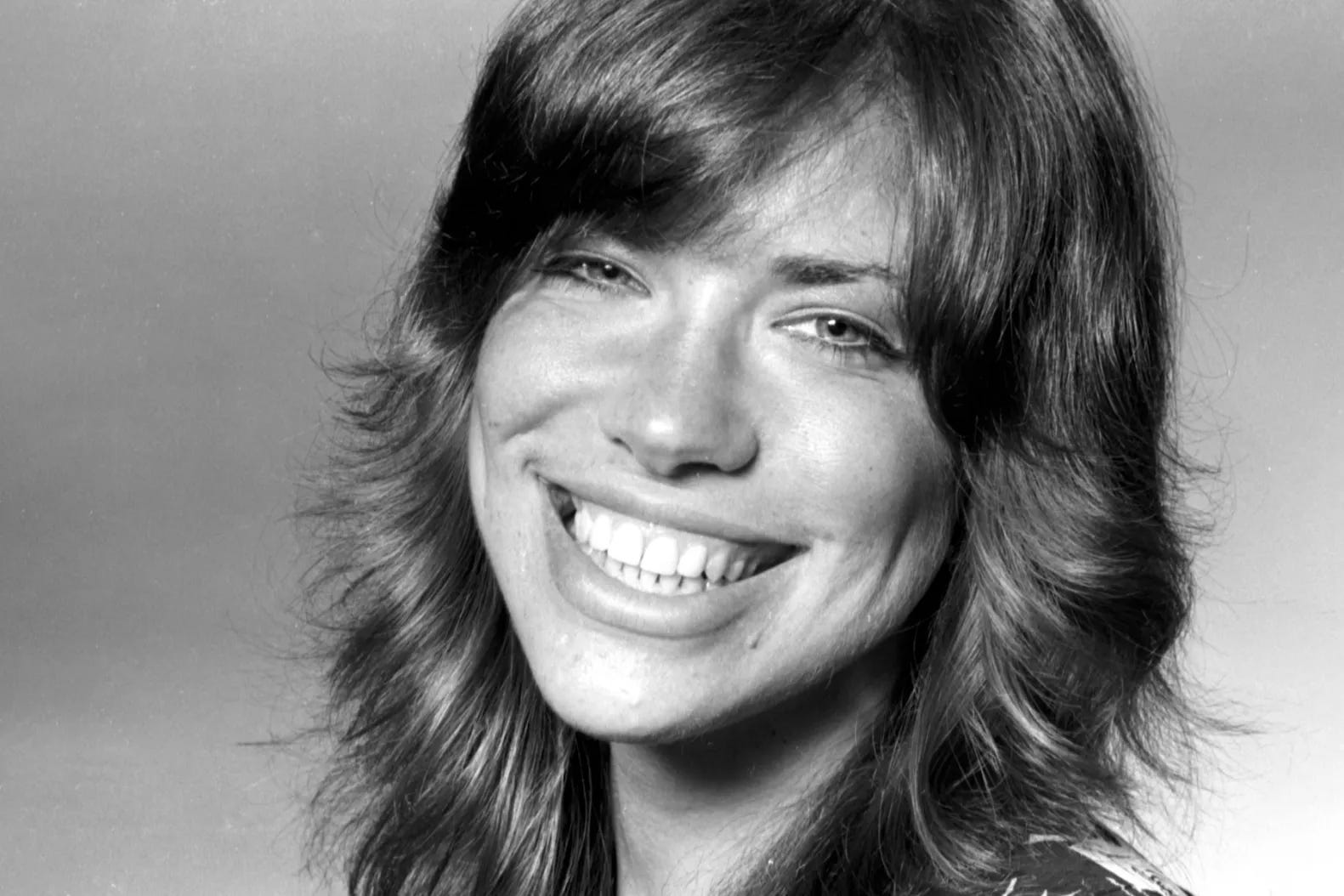
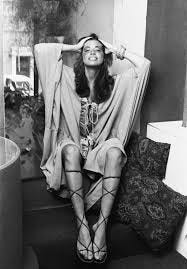
Another fun fact is that Donaldson, although he was living in squalor at the time, almost married the singer Carly Simon, who was besotted with him. Blacker has a theory that Donaldson might have engineered the page three girl shoe situation so that he could take up with the then twenty-year-old Simon. She wrote two songs about him: You’re the One and The Best Thing. Possibly also You’re So Vain. When she returned to the US, he wrote her a letter saying it was over. Carly Simon married James Taylor. Donaldson resumed the affair with Sarah Miles but she fell in love with and married Robert Bolt, the writer of A Man for All Seasons and Ryan’s Daughter. “By early 1966, neither Sarah nor Carly were part of Willie’s life.”
Funny and Sad
William Donaldson, who died on June 22, 2005, aged 70, was described by Kenneth Tynan as "an old Wykehamist who ended up as a moderately successful Chelsea pimp". He was also a failed theatrical impresario, a crack-smoking serial adulterer and a writer of autobiographical novels.
Blacker explained what made him write the biography: “I wanted to find out what happened to Willie Donaldson: a man who had known, worked with, employed and gone to bed with some of the most remarkable people of his generation but who would only present his memories of them through a fairground mirror of jokes; who appeared to have a reckless confidence yet was riddled with self-loathing; who confessed all but revealed nothing; who was so extraordinarily funny and yet so sad.” In an interview, Donaldson said: “Failure is lovely and cosy.”
Root
It was under the nom de plume “Henry Root” that Donaldson became best known. Root was a right-wing nutcase, a retired wet fish merchant from Elm Park Mansions, SW10, who wrote brash, abusive letters to eminent public figures, (including the Queen and Mrs Thatcher) sometimes enclosing a one-pound note. Often, the recipients took these letters seriously and replied, stimulating Root to weave a web of misunderstanding. For example, he latched on to the fact that one of Thatcher’s ministerial minions called himself Dr Patrick Cosgrave but was not listed at the BMA. Because he could not get a satisfactory response to his doubts about Cosgrave’s medical credentials, he always referred to him as Mrs Thatcher’s chiropodist.
Perhaps Sacha Baron-Cohen was inspired by Henry Root to create Ali G and Borat. Perhaps Donaldson was inspired by Minder. Is it significant that, on TV, Root was played by George Cole who brought us Arthur Daley?
I see Donald Trump as more like Arthur Daley than Al Capone.
Root chastised the Archbishop of Canterbury for failing to thank him for the five pounds he had donated towards roof repairs; suggested to Margaret Thatcher (who kept the enclosed one pound) that Mary Whitehouse should be made Home Secretary – (Donald Trump is making similar appointments); sympathised with the Queen about the "problems" she was having with Princess Anne ("My Doreen, 19, is completely off the rails too, so I know what it's like"); and told the Thorpe trial judge, Sir Joseph Cantley: "You tipped the jury the right way and some of your jokes were first class! Well done! You never looked to me like the sort of man who'd send an old Etonian to the pokey", a communication which brought a visit from the police, investigating allegations of attempted bribery.
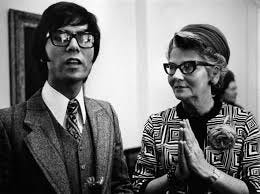
Root volunteered to run sundry failing football clubs; to visit the Chief Constable of Manchester with his newly- formed group The Ordinary Folk Against The Rising Tide of Filth in Our Society Situation (TOFATRFLOSS); asked Angela Rippon to send him a photograph of Anna Ford (she was president of the Manchester University Students Union when I arrived in October 1966. I noticed on my first day that she had fat ankles) and enquired of the Tory Party director of finance the going rate for a peerage. He wrote to the late Sir James Goldsmith urging the elimination of "scroungers, perverts, Dutch pessary salesmen and Polly Toynbee". "Dear Mr Root", Goldsmith replied, "Thank you for your letter which I appreciated enormously."
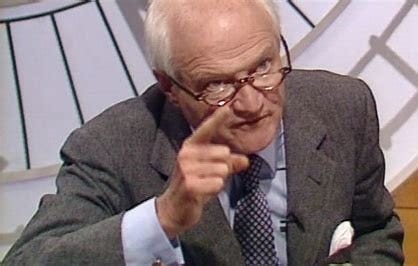
Some recipients of Root’s letters were puzzled, (Brian Clough did not seem to have been fooled) some furious, and some took them seriously. Nicholas Scott, (one of the more decent and human Tory ministers that I encountered in my civil service career), assured Root that sexually all was well between himself and his wife. The Foreign Office replied to Root's enquiries as to whether Mrs Root might be assaulted by "local Pedros" on holiday in Ibiza, informing him that "the activities to which you refer are indeed apt to occur in most popular tourist centres". When he told Sir David McNee, then Police Commissioner at Scotland Yard, that it was "better that ten innocent men be convicted than that one guilty man goes free", he was told: "Your kind comments are appreciated."
Mrs Thatcher's priority, Root informed general Zia-al Haq of Pakistan, was "the immediate restoration of the death penalty". The General thanked the sender for his "very pertinent views" and enclosed a photograph for Mrs Root. A letter in which Root informed Esther Rantzen that she was "a fat idiot" and her television show "a disgrace", received a reply assuring him that "hearing from viewers like yourself is a tremendous morale boost for all of us".
Journalists were particularly gullible. Not one hack refused the invitation to contribute some choice item of rubbish to the Henry Root Anthology of Great Modern British Prose. In a letter to Nigel Dempsey [sic], the Daily Mail's diarist was softened up by the assurance that "some folk deride sycophantic gossip about one's social superiors as a lot of snobbish nonsense, but I am not of their number".
Writing to Harriet Harman, then of "The National Council for so-called Civil Liberties", he began: "I saw you on television the other night… Why should an attractive lass like you want to confuse her pretty little head with complicated matters of politics, jurisprudence, sociology and the so-called rights of man? Leave such considerations to us men, that's my advice to you. A pretty girl like you should have settled down by now with a husband and a couple of kiddies." If she must work, he continued, she should consider a career such as "that of model, actress, ballroom dancing instructor or newsreader", before enclosing a pound for her to buy a pretty dress and urging the future MP and Mother of the House of Commons to get in touch with "my friend Lord Delfont".
Education
Charles William Donaldson, the son of a Scottish-born shipping magnate, was born on January 4, 1935, in Sunningdale, Berkshire, where he grew up, surrounded by servants, in a 30-roomed mansion. He was fond of his father, but disliked his snobbish, bullying mother and never forgave her for firing the family's faithful chauffeur after she discovered that he voted Socialist.
Donaldson was educated, like Rishi Sunak (an already obliterated UK prime minister) at Winchester, where he discovered that he had lost the contest for the title of stupidest boy in the school when his competitor, an Earl, was advised to "try Eton" after just one term. He then concentrated on perfecting his skills as an eccentric nuisance, wearing his straw hat at a facetious angle, (I was once hauled up before the beak for folding my school tie in half) conducting sexual experiments with other boys behind the squash courts (my sexual experiments consisted of looking at Parade magazine in the bike shed) and instigating "positive" bullying - by boys of the prefects.
Military Service
When he was called up for National Service in the Navy, Donaldson's mother rang up the First Sea Lord and told him that her son was about to do the season - "affianced to Isabelle Giscard d'Estaing,” the future President of France's sister- and was not ready. "The First Sea Lord realised that he had met his match and suggested that I pitched up when it suited," Donaldson recalled. He served as an officer in submarines then went up to Magdalene College, Cambridge, to read English.
During National Service, Donaldson had come under the influence of the writer Julian Mitchell, (who wrote the play and film Another Country and many original TV plays and series episodes, including ten episodes of Inspector Morse). Mitchell introduced him to theatre and ballet and suggested he edit a literary magazine, Gemini. Ted Hughes and Sylvia Plath were among his contributors.
Theatre
When he became a theatrical entrepreneur, successes included The Bedsitting Room and An Evening of British Rubbish. However, four years of success were followed by a string of failures, beginning with the aptly named Knights of Catastrophe (1965), a doomed attempt to revive British music hall. Donaldson was sued for blasphemy by the Fascist dowager Lady Birdwood for a show in which God joins forces with Satan to punish Pope Alexander VI. In 1966 the Daily Sketch carried a report which read: "Vanished producer leaves entire cast in Liverpool. Sole clue to his whereabouts a note reading 'Have gone to London for money! Back tonight! Don't worry! We have a hit on our hands!' ". He remained on the Equity blacklist for many years. By the late 1960s, Donaldson was losing so much money he had to sell the family house in Berkshire; in 1970 he went into voluntary liquidation.
Marriage
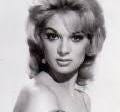
His first marriage, in 1957, was to Sonia Avory, the daughter of tennis champion Ted Avory. Donaldson said he had never been attracted to the "squashy, pink-faced tennis type", and he regretted the marriage even before he had walked down the aisle. On honeymoon he read pornography wrapped in the cover of Kingsley Amis's Lucky Jim. By the time his only son was born in 1959, he had begun an affair with Jeffrey Bernard's actress wife, Jackie. When, two years later, they agreed to elope, Donaldson hurried home to tell his wife and left with his pajamas in a suitcase. Three days later Jackie rang to tell him that they were "ships that pass in the night" and that the deal was off.
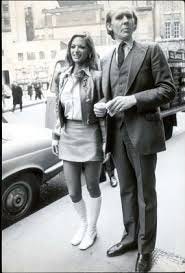
In 1968 he married another actress, Claire Gordon, whom he had auditioned for Lady de Winter, a nude role in his production of The Three Musketeers. She introduced him to cannabis and they held wild orgies, with call girls, naked DJs and two-way mirrors. In 1970 a headline read "Cannabis case impresario fined. When cautioned, the accused asked the arresting officer 'Haven't I seen you at one of my pot parties?' In 1992 Claire Gordon revealed the "Randy secrets of the real Mrs Root" to a tabloid, describing how her husband sent pornographic pictures of her to contact magazines in exchange for a plug for her fitness video.
Pimp
In 1971, Donaldson fled wife and creditors and left for Ibiza, where he spent his last £2,000 on a glass-bottomed boat, hoping to make money out of tourists. By the end of the season, he had no money left and had to sell the boat for £250. He returned to London when he heard that a former girlfriend had gone on the game, moved into her Chelsea brothel as a "ponce" and used his experiences as the basis for his first book, Both the Ladies and the Gentlemen (1975). I read that book at the time and enjoyed it. Kenneth Tynan compared Donaldson's prose to PG Wodehouse and bought the rights to the book, hoping (in vain) to turn it into a musical.
By the time Henry Root was born, Donaldson was living with his former secretary, Cherry Hatrick. They married after she told him that he had behaved so badly that they would have to get married if he wanted to continue living with her. The marriage lasted six months before she walked out.
More on Root
Donaldson made and frittered a lot of money from Henry Root. Following the initial volume of letters, there was a second volume plus The Soap Letters. I laughed a few times at that but there were too many characters and the humour became diluted and somewhat confusing. There were other Root sequels (including Root into Europe (1992)
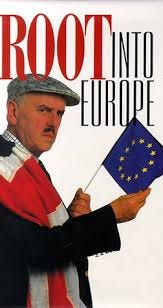
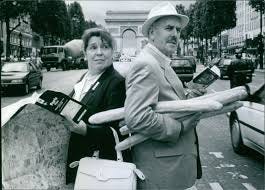
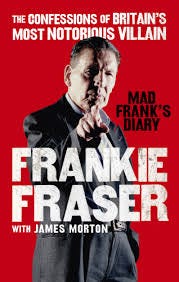
and Henry Root's World of Knowledge (1982), a television series and a column in the Independent, in which Donaldson chronicled the bad behaviour of his friends such as the gangster Mad Frankie Fraser.
In The Heart Felt Letters (1998) under the pseudonym "Liz Reed" of Heartfelt productions (company motto: "a tragedy aired is a tragedy shared") Donaldson pitched proposals for television shows to Dawn Airey at Channel 5, including Topless Gladiators, with the former Judge Pickles acting as arbitrator; succeeded in involving the Dean of St Paul's in a Princess Diana "Compassion video" (featuring Esther Rantzen and a group of grieving mothers reciting prayers over footage of catastrophes), and offered James Boyle at Radio 4 a game show with "in the hot seat a celeb, who in spite of mega achievements, is thought by everyone to be a total pillock. Jeffrey Archer, Andrew Lloyd Webber, Janet Street-Porter… "
Brewer's Rogues, Villains and Eccentrics (2002) was a series of pen portraits of "Roguish Britons Through the Ages"; I'm Leaving You Simon, You Disgust Me (2003) was a collection of modish clichés and dinner party vacuities. Both books were dotted with vendettas pursued through masterpieces of cross-referencing, for example "Jesus, believing oneself to be having carnal relations with. See Edinburgh, Prince Philip, Duke of". Magnus Magnusson, Sandi Toksvig, Mariella Frostrup and Sven-Goran Eriksson were all referenced under "See Eskimos working in the United Kingdom".
Other books included The English Way of Doing Things (1984); Great Disasters of the Stage (1984); (The balloons in the black bag) Nicknames only (1985); The big one, the black one, the fat one and the other one: my life in showbiz (1992); and From Winchester to This (1998).
In 1994, Donaldson went bankrupt for a second or possibly third time, after failing to open several years' worth of tax demands. When rung by The Daily Telegraph's Peterborough column to ask how had managed to run through the Root takings in such a short period, he candidly admitted that he had "been an idiot". (Though he put it more bluntly: "I've been a complete cunt.")
In the mid-1980s, Donaldson moved back to Ibiza where he became infatuated with Melanie Soszynski, who in 1986 was charged, along with the Marquess of Blandford and others, with supplying cocaine. After the trial (at which she was acquitted) Donaldson sent her to a clinic in Weston-super-Mare, where the doctor told her: "I can help you, but I don't think I can help Mr Donaldson." When Melanie Soszynski dumped him, Donaldson wrote Is This Allowed? (1987), inspired by their life together. In 1986, he wrote as “Talbot Church, friend of the royals”, the author of a book about Prince Andrew and Sarah Ferguson entitled 101 Things you didn't know about the Royal Lovebirds. Several of Talbot Church’s spurious royal stories found their way, without accreditation, into the pages of a leading newspaper.
Diabolic
Donaldson/Root's tormenting of his victims was often lovingly prolonged and Donaldson readily accepted there was something sadistically unpleasant and dishonourable about the whole jape. Peter Morgan, who later achieved fame as a writer and director of fact-based dramas such as The Crown (and partner of Gillian Anderson), did drugs with Donaldson in the early 90s. “The Willie of that time was unbelievably damaging personally…Willie had a profound instinct to corrupt and destroy. There was an extremely large Dionysian streak to him. He was quite diabolical.”
Some said that one of his more redeeming features was that, while he hated pomposity and hypocrisy in others, he disliked himself even more. However, he seemed to enjoy hating himself too much. "The salient features about me are laziness, self-indulgence and sex addiction," he confessed, in his characteristic melancholy drawl. "I'm genuinely shocked by my own behaviour." He was a role model of ineffectual masculinity who behaved badly but with mannerly diffidence.
Donaldson painted himself as a sordid sexual obsessive indifferent to the misery he heaped upon others: "My life is fucked up - I've used people, and on the whole, I haven't had a good time. I say to young people 'steady on, or you'll end up like me'." In his sixties he claimed to have been in thrall to a prostitute, used crack, and taken the date rape drug Rohypnol recreationally: "The trouble is, it wipes your memory. You have to video yourself to appreciate just what a good time you had."
Living above the Station
Donaldson disliked the ethos of Private Eye (Britain’s bestselling magazine to which I am a frequent contributor). Private Eye (and its founding editor, Richard Ingrams) expressed a visceral loathing of Donaldson over four decades, describing him as “an appalling little shit”, “a slimy crook”, “an appalling sleazebag”. Spike Milligan wrote to the magazine defending Donaldson. Donaldson inserted vicious attacks on Ingrams in all of his books. Blacker puts it: “…the mockery of those deemed to have ideas above their station was a bullying and peculiarly English form of anti-intellectualism…He revered the famously forbidding and uncompromising English don FR Leavis…He respected and longed for seriousness but never quite had the confidence to be serious.”
A recurring theme is inauthenticity. A dislike of people unable to distinguish between themselves and a socially-imposed reality, the fake chumminess of TV presenters and radio DJs.
He maintained Wykehamists (Winchester pupils) were unbalanced by cleverness; either they were too clever or they had to live their lives eaten away by the knowledge they weren't clever enough. Rishi Sunak? "I'm an intellectual groupie," he said; he made clear that meant he uncritically admired intellectuals. He remains the only diarist on the Mail on Sunday to have phoned Sir Karl Popper for a quote. As he was writing under the pseudonym of Henry Root, a wet fish merchant, this baffled Sir Karl as well as the readers of the Mail on Sunday.
The Mail reported in 2017 that the originals of the Root letters and the responses were to be auctioned for £4,000.
What a character, and the man behind the character seems even more of a character!
Such an interesting life to read about, I am not sure the same could be said of living it, but I suppose he probably never got bored!