
Roland Kirk
Clarion X recently posted a characteristically profound piece on Roland Kirk. I commented that I had the great privilege of seeing Kirk perform live in 1966. https://substack.com/home/post/p-17054970

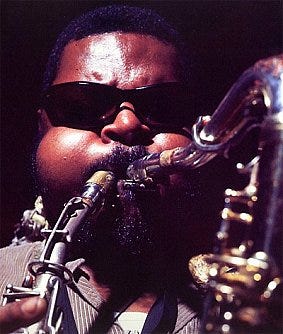
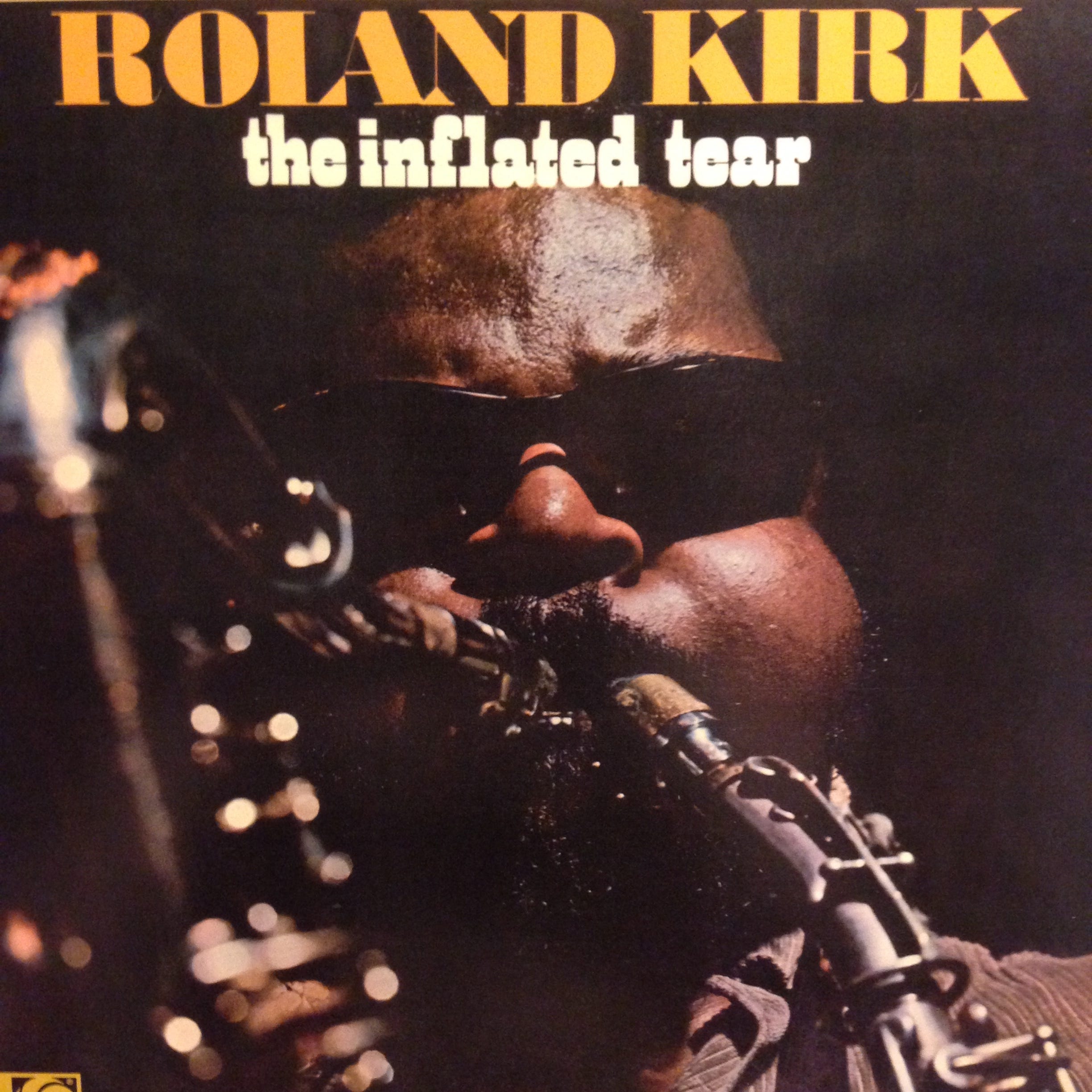
Clarion responded: “Michael, what a gift to have been in that room. 1966, Kirk was at the height of his powers then, just before he recorded The Inflated Tear. I can only imagine what it must have been like to witness that endless flow in person, to feel the air. If you're comfortable sharing, I'd love to know what stayed with you from that night. what did it feel like. Your witness to that moment is part of the history I'm trying to capture here. Thank you for reading, and even more for carrying that moment with you all these years.”
I may not be able to remember many details from 60 years ago but I remember very strongly a feeling, an atmosphere. Joy is the main thing I remember.
I cannot remember whether we were seated or standing, moving around, promenade style. The normal procedure at both auditoria of Manchester University was for the audience to be standing and wandering about. I distinctly remember being towards the back of the hall facing the stage with keen anticipation.
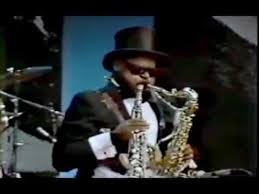
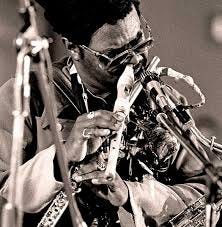
Then there was a joyous noise from behind me. It was Duke Ellington’s familiar piece, “Satin Doll”, played differently. Turning around, I saw Roland Kirk, bristling with instruments, horns coming out of every orifice, making his way through the audience to the stage. Kirk was a multinstrumentalist and played many of the instruments at the same time. He was adept at tenor saxophone, clarinet, stritch, manzello, nose flute, flute, oboe, recorder, cor anglais, trumpet , keyboards, percussion. I may have forgotten some.
Thanks to the magic of the internet, I was able to confirm the date of the gig. I was able to access a review (entitled “Kirk’s flute’s a beaut”) of the concert by Jeff Goldstein in the student newspaper, the Manchester Independent dated November 29 1966. Goldstein wrote: “Roland Kirk is a one-man happening. He happened on Thursday November 17 at Tech Union and provided what must have been one of the most intensely exciting experiences any of his audience can recall.” Amen to that!
There were two campuses at Manchester. I was a BA student in the Department of American Studies at the older bit, The Victoria University of Manchester, founded in in 1851 as Owens College. The foundation of UMIST (University of Manchester Institute of Science and Technology) can be traced to 1824. One of the founders was John Dalton, who introduced the atomic theory into chemistry. My bit of the university was known as “Owens” ; the other bit was known as “Tech”. On 1 October 2004, the Victoria University of Manchester merged with the University of Manchester Institute of Science and Technology form a new, larger entity named the University of Manchester.
On October 3 1966 I arrived at Owens as a fresher. Less than a month later, I was at Tech being bowled over by the genius of Roland Kirk. This was a heady experience for a yokel from Gloucester. Also in 1966, I saw Freddie Hubbard at Manchester Cathedral with Ronnie Scott and Dexter Gordon at Club 43, Amber Street, Shude Hill, Manchester.
Yokel I might have been, but Kirk’s work was not knew to me. I had already got myself a reasonable education in jazz before moving to the big city. Many friends in Gloucester liked different kinds of jazz and we gathered at each others homes to share our discoveries. Chris Breen played a mean fiddle and lived in his parents rambling house in a bohemian square near Kingsholm rugby football ground. Down in the basement we listened to Charlie Parker, Django Reinhardt, King Pleasure, Bob Cooper and Bud Shank. Malcolm Choate brought along his MJQ records.
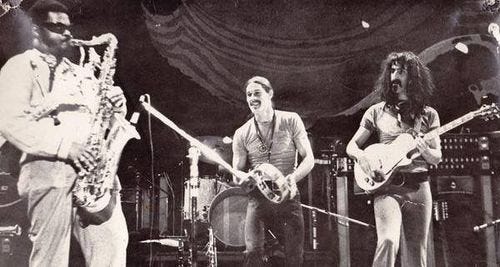
One resource was Gloucester Public Library. I worked there part time for a few years while still at school, I was fortunate enough to attend a couple of lectures on the blues by the distinguished scholar Paul Oliver and a a couple of performances by Cyril Tawney. As well as stacking books, I also worked at the record library. I must confess that I squirrelled quite a few jazz albums away at home. One that particularly struck me was The Black Saint and the Sinner Lady by Charles Mingus, from 1963. I appreciated the Ellingtonian influence on that. I was lucky enough to see Mingus in 1972. Although Kirk was not part of the personnel of The Black Saint and the Sinner Lady, I was induced to seek out more Mingus and found Kirk playing a prominent role on Tonight at Noon. That album was released in 1964 (although it combined sessions recorded in 1957 and 1961). Even today, I still have “Peggy’s Blue Skylight” going through my head. I had a couple of Kirk’s Mercury EPs which were released in 1961 which featured instruments I had never heard of like manzello and stritch. I was aware of the 1965 album Rip, Rig and Panic with the stellar lineup of Richard Davis, Jaki Bayard and Elvin Jones. Kirk mentioned Edgard Varèse's compositions Poème électronique and Ionisation as inspirations for the album. Frank Zappa frequently mentioned Varèse and also played with Kirk.
I have seen another article in the Manchester Independent, this one dated November 15 1966. This one was by Joel Kaye (I knew him! I can picture him.) and explores the potential impact of the Labour government's nationwide price freeze on Union subscriptions. “Fears are the freeze could result in at £10,000 deficit in funding, which could lead to closure of the new £450,000 Tech Union building.” The paper also reported a change of venue. “In happier news, jazzer Roland Kirk's gig has been moved from Owens Union to the Tech's bigger hall.”
So it was that I experienced Kirk at the Barnes Wallis (of dambusters bouncing bomb fame) Hall at UMIST rather than the smaller hall at Owens. I did see Cream, The Who, Jimi Hendrix, (Hendrix idolised Kirk and wanted to record with him) Stevie Wonder, Paul Butterfield Blues Band, Jethro Tull, Arthur Brown, Graham Bond, Chris Farlow, at the Owens hall.
See my Substack article on Jethro Tull. Their first album featured a Roland Kik composition.
Jethro Tull

I well remember seeing Jethro Tull perform at Manchester University Students’ Union before they released any records. I bought (or perhaps one of my flat matés did) This Was, their first album, as soon as it was released, and we played it to death. I could not precisely remember the date that I saw them. I will go into that in more detail later.
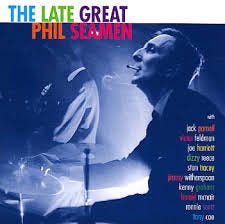
For his Barnes Wallis gig, Kirk did not bring his own American band. This was a British “pick up” band but it did include the legendary Phil Seamen on drums. Seamen played with anybody who was anybody (Dexter Gordon, Freddie Hubbard, Tubby Hayes, Carmen McCrae, Joe Harriott, Victor Feldman, Georgie Fame, Ginger Baker). Seamen was on his way to the US when he was apprehended for possession of drugs. He lost work because of his heroin addiction and he died at the age of 46. For the Kirk gig , Dave Green was on bass and Johnny Birch was on piano.
The Kirk set list on November 17 1966 included We Free Kings, Three for the Festival, Buddy Can You Spare a Dime? Cocktails for Two, Here Comes the Whistle Man. Kirk handed out penny whistles to the audience and invited every one to join in. This was a joyous spectacle and a glorious noise which worked as music despite frequent accusations against Kirk of gimmickry and clownishness. He muttered and wailed vocally whilst he played his flute, long before Keith Jarrett started wailing and muttering. Sometimes he would talk politics. He was a serious and accomplished man having fun. I recall thinking as I watched Kirk festooned with instruments as he inserted a nose flute, “which orifice is he going to employ next?” As Jeff Goldstein put it “Kirk is jazz’s chief audio-visual aid.”
Kirk became blind at the age of two because of bad medical treatment. He was on the road playing music by the time he was 15. He started the multi instrument stuff early on. Hank Crawford said, “"Now they had him doing all kinds of goofy stuff but he was playing the two horns and he was playing the shit out of them. He was an original from the beginning." He was also politically aware and a great wit, a surreal raconteur.
He was only 42 when died but he left us much to enjoy.