
Portuguese Polyphony
Another rambling piece of self-promotion and solipsism making bizarre connections and ignoring rules about how to be successful on Substack and possibly indicating mental health problems on my part.

I promised this to Linda Brady.
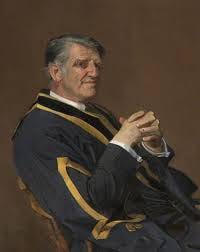
At the end of 1982, I moved from Manchester to London to work for Sir Arthur Armitage at SSAC (Social Security Advisory Committee), a statutory body that provides impartial advice to the UK government on social security issues. When SSAC reports on government proposals for regulations the report must be presented to Parliament together with the regulations and a statement from the Secretary of State for Work and Pensions responding to any recommendations.
While working at SSAC, I made some visits to parliament, sitting in at select committee hearings. I was in the House of Commons when Gordon Brown made his maiden speech and listened to a heated exchange he had with Sir Rhodes Boyson. Boyson was surprisingly genial when he came to a SSAC lunch. He wanted to talk to me rather than Sir Arthur. The late Tony Newton (later Baron Newton of Braintree) was very gracious, although he smoked at the lunch table, which you cannot imagine anyone doing today. By the end of my so-called career, I was on first-name terms with three members of the House of Lords and clinked glasses with the High Primate of All Ireland (that was Archbishop Robin Eames, not a monkey.)
Working at SSAC was a fairly stressful experience, mainly because of a difficult civil service boss. I got on very well with Sir Arthur (he introduced me to Lady Armitage: “this is Michael, who has the great good fortune to be a Manchester graduate.) Sir Arthur was vice-chancellor of Manchester University, my alma mater. I also got on well with senior civil servants and government ministers.
I was particularly fond of two of the committee members, Henry Hodge and Harold Good.
Henry Hodge
Henry Hodge was unusual in that he was a solicitor who became a judge. He was only the third solicitor to achieve this. He qualified as a solicitor in 1970. He then joined the Child Poverty Action Group, working as its solicitor and deputy director until 1977. In 1974, he became chairman of the National Council for Civil Liberties (now known as Liberty).
Henry once joked that he was married to the Labour Party. He married Labour politician Margaret Watson (Oppenheimer) in 1978, with whom he had two daughters. Margaret Hodge had a controversial stint as leader of Islington Council and served as a minister in Tony Blair’s government. Henry Hodge was given an OBE for services to SSAC (even though he had clashed on several occasions with Sir Arthur, whom he called “Uncle Arthur”, and eventually owned up to a leak to The Times that got us all interrogated by a sinister spook. I felt particularly uncomfortable because I was the only one in the office to take the phone call from Nicholas Timmins, which broke the news that there had been a leak).
In September 2008, Hodge was diagnosed with acute myeloid leukaemia having been ill for over a year before that with heart problems, which necessitated many hospital admissions. The treatment was very difficult, and Hodge spent most of the time after the diagnosis in University College Hospital. He endured four sessions of chemotherapy and a bone marrow transplant.
I cannot claim to have known Henry very well, but he was always decent to me and excellent company, with a mischievous wit. In an obituary, Maggie Rae wrote: “His great success as a lawyer, however, should not blind us to the thread that ran through Henry's career, namely his commitment to use the law and his considerable talents in the service of those less fortunate, with the aim of making the law fair and accessible to all.”
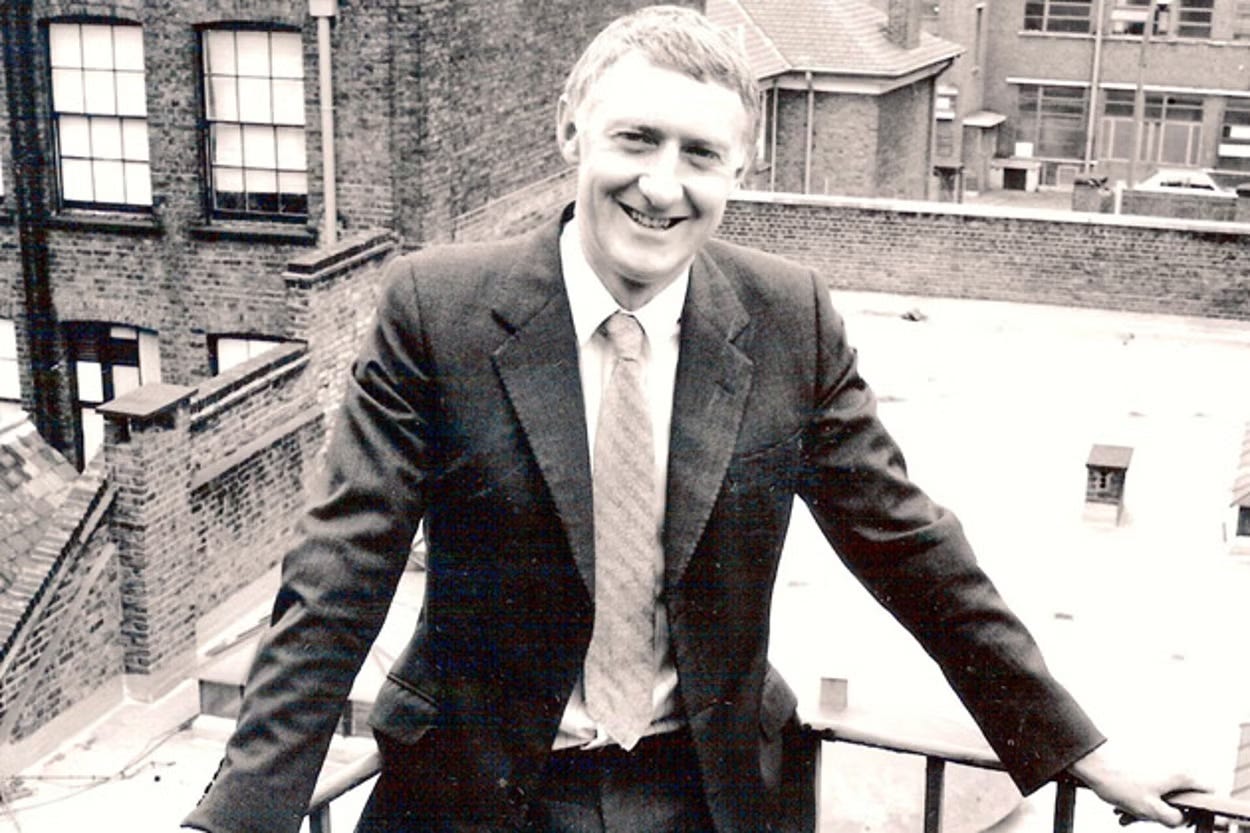
Harold Good
The Reverend Harold Good was a Methodist minister who served as president of the Methodist Council. He trained as a hospital chaplain at the Methodist Hospital in Indianapolis in 1967–6. Good returned to Northern Ireland, after spending several years on civil rights work in the US, to take up a post in August 1968 in Agnes Street church on Belfast’s Shankill Road just as the Northern Ireland Civil Rights campaign began.
Harold worked closely with both Republican and Loyalist prisoners with a view to their resettlement. He was the Director in the 1970s of the Corrymeela community, a centre for reconciliation between the communities. He was chair of NIACRO (Northern Ireland Association for the Care and Resettlement of Prisoners) and part-time prison chaplain at Crumlin Road prison.
I was exchanging emails with Harold (about Ireland, Sri Lanka, Jimmy Savile, Martin McGuinness) until quite recently and was flattered that he remembered me after such a brief acquaintance such a long time ago.
Harold and Clodagh Good’s home played a significant part in ending The Troubles, with people such as Martin McGuinness, unionist Jeffrey Donaldson and loyalist paramilitaries getting to know each other around the Goods’ kitchen table.
Many found it impossible to forgive the atrocities committed by the IRA when McGuinness was IRA Derry Commandant. A key part of the Good Friday agreement was the release and rehabilitation of all political prisoners. Harold still comes under criticism as well as praise for his part in the peace process.
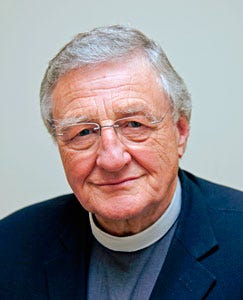
Four Reverends
I had heard of Martin Smyth before and considered him a terrible bogeyman. The Reverend Harold Good had played an important practical role behind the scenes getting the GFA (Good Friday Agreement) to work by building up a good relationship with McGuinness in relation to arms decommissioning. Harold told me that he came to consider McGuinness a friend.
The Reverend Martin Smyth was the most high-profile Ulster Unionist opponent of the GFA. He was solidly amongst the hardline Protestants while the fearsome Reverend Ian Paisley became part of a comedy double act with McGuinness. The old enemies had become bosom buddies, and The Auld Roarer had become cute.
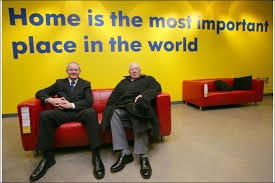
Smyth was selected to fill the vacancy caused by the murder of Robert Bradford, MP for South Belfast.
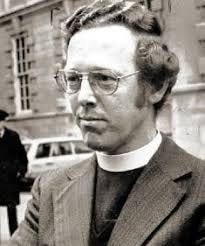
In the 1982 by-election, Smyth received over 17,000 votes and was returned. Smyth was for many years Grand Master of the Grand Orange Lodge of Ireland and held the key role of President of the Ulster Unionist Council. He had an unshakeable belief in Ulster's place in the United Kingdom and was firmly opposed to any cross-border co-operation. He stood against David Trimble (who was not well-liked but earned grudging respect for his work on the GFA) for the leadership of the UUP in 2000 and won over 40% of the votes.
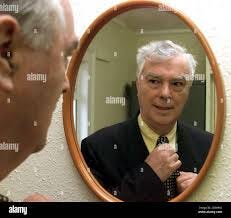
On the other hand, Smyth was a stout defender of the NHS.
Smyth was on the parliamentary advisory board of Western Goals (UK), which held a well-attended fringe meeting at the Conservative Party conference in October 1988 on the subject of "International Terrorism – how the West can fight back". He was one of numerous high-profile speakers including General Sir Walter Walker, Andrew Hunter MP, Sir Alfred Sherman and Harvey Ward. Hunter and Ward both gave considerable detail to the meeting concerning top-level links between the IRA and the ANC.
Andrew Hunter and the Orange Lodge
Andrew Robert Frederick Ebenezer Hunter (born 8 January 1943) was an English MP and also a member of the Orange Order. He represented Basingstoke from 1983 until 2005. From 1990 to 2001 he was Vice-Chairman of the right-wing Conservative Monday Club.
In 2002, Hunter withdrew from the Conservative Party in order to contest elections for the Northern Ireland Assembly as a candidate of the DUP (Democratic Unionist Party) (DUP). He had family and Orange Order connections with Northern Ireland and opposed the Good Friday Agreement. He stood in Lagan Valley in the 2003 Northern Ireland election, but failed to gain a seat, coming seventh in the six-seat constituency.
He married Janet Bourne in 1972. She was a friend of mine a long time ago. Janet was a pupil at Denmark Road High School for Girls in Gloucester. I had a large circle of friends there (including the now distinguished poet and philosopher Denise Riley) but I did not know Janet then. I knew of her but considered her somewhat above me in status. She was a doyenne of the ‘elite’ Alligator Club in which I was an insignificant minnow. I got to know her well when she came to work at Gloucester Public Library where I had worked part -time since the early 60s. I became very fond of her, finding her much more approachable than I had imagined. Even after I left Gloucester, we kept in touch because her cousin was one of my good Manchester University friends. Janet and Denise came to call on me at my Gloucester home during a vacation. I was out and did not meet them. My Father said, “Two big wenches were looking for you.”
Janet died too young.
SSAC and Northern Ireland
SSAC normally held monthly meetings (working lunches with wine) at its offices in New Court off Chancery Lane but decamped to Belfast once every year for a series of meetings. I accompanied them in 1983. One of the meetings was at Stormont Castle and I was there to take the minutes. During a break, I was zipping up at the urinals in the grandiose Stormont gentlemen’s toilet, when a voice behind me said “Good afternoon to you. I hope you are enjoying your time in Belfast.” It was the Reverend Martin Smyth. The ogre was charm personified.
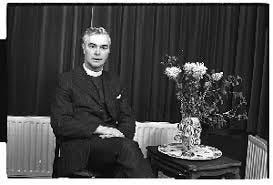
Northern Ireland in 1983
When I arrived at our Belfast hotel, despite a good knowledge of the situation in Northern Ireland, I was still shocked to see a group of policemen getting out of a van carrying guns. It also surprised me that their uniforms were green, not something I had noticed on the TV news. Harold delighted in taking us around Belfast on what he called “Good’s Tours.” Living in Manchester and London, I had become accustomed to the need for vigilance and tolerance of security inconveniences throughout the 70s. Central Belfast in 1983 was something else. I experienced a similar thing in Colombo in the early 2000s when the Tamil Tigers were active. Army blockades were such a normal thing in Sri Lanka that they were sponsored by advertisers.
Around the time SSAC visited Belfast in 1983, a lot of things were happening. On 6 January 1983, two undercover RUC (Royal Ulster Constabulary) officers were shot dead by members of the IRA in Rostrevor, County Down. On 16 January, William Doyle, a County Court judge, was shot dead by the IRA as he left mass in south Belfast. On 26 February, Ken Livingstone, then leader of the Greater London Council, travelled to Belfast at the invitation of Sinn Féin. The visit drew strong criticism from Unionists. On 22 March, a Sinn Féin candidate won a seat in a district council by-election in Omagh, County Tyrone. This was the first local government election contested by Sinn Féin during the current conflict. In April 1983, the RUC Chief Constable recommended that none of the officers in the alleged shoot-to-kill investigation should face prosecution. In a 'supergrass' trial in Belfast 14 UVF (Ulster Volunteer Force) members were jailed for a total of 200 years. The whole trial was based on the evidence of Joseph Bennett. Bennett was granted immunity from prosecution for the crimes he committed, including involvement in killings, in return for his evidence. It later transpired that those providing evidence were offered substantial sums of money.
Dinner in Enniskillen
The Northern Ireland Office had arranged for SSAC a dinner at the Manor House Country Hotel in Enniskillen, County Fermanagh, about an hour and a half’s drive from Belfast. The guest of honour was Chris Patten who was then a junior minister at the Northern Ireland Office.
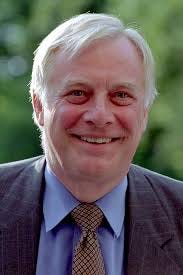
Four years after our visit to Enniskillen, twelve people died as a result of an IRA bomb using Semtex provided by General Gaddafi of Libya. That bombing is often seen as a turning point in the Troubles. The IRA disbanded the unit responsible.
Sir Arthur had been extremely nervous about the trip to Northern Ireland, fearing that he might be the target of an assassination attempt. Hosting Chris Patten made him more nervous. One of the committee members was Professor Olive Stevenson. During the course of the evening she became extremely agitated, feeling claustrophobic about the layout of the dining room. She became very flushed and slurred as she glugged down red wine. She could imagine herself being trapped in a corner as Provos stormed in, guns blazing. Olive was an interesting character study. One of those useless facts that stick in my mind is that she drove a Datsun Cherry. This I knew because I had the job of processing her expenses claims.
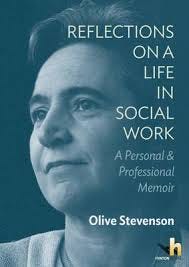
She was born in 1930 in Croydon, the youngest child of John and Evelyn, who were Irish non-churchgoing Presbyterians who had emigrated to England fearing discrimination at the hands of the Free State government. According to Terry Philpot in the Oxford Dictionary of National Biography, Olive “remained deeply distrustful of Catholicism". In her memoir, Reflections on a Life in Social Work, she wrote openly about her lesbianism. She wrote of relationships that were "fraught with tension and pain" and which led her to undergo psychoanalysis.
She had a disinguished career in social work and academia. In the Guardian obituary when she died at the age of 82 in 2013, Phylidda Parsloe wrote that Stevenson: “was the leading social work academic of her generation. She helped to improve the well-being and safety of vulnerable children and adults, made an immense contribution in teaching, writing and practice, and influenced several generations of scholars.” Parsloe added a personal touch: ‘’Olive also had a skill and a capacity for friendship, which I enjoyed for the 50 or so years I knew her.” In the brief time I knew her, I also liked her.
Chris Patten
Before dinner at the Manor House Country Hotel, I got into a conversation with Chris Patten because I was chatting with Henry Hodge who had been friends with Patten at Balliol. A somewhat cocky young man was hanging around the peripherary of our conversational group. Henry, who was a bit of a mischievous wag, said to the bumptious young fellow, “Are you Chris’s minder then?” The young man looked deeply offended and said, “I am his personal assistant. That’s his minder over there.” He pointed to a gorilla of a man, sitting jacketless in an ante-room displaying his braces and a holster. He was methodically cleaning a gun, making it ready for action. When the evening was over this gorilla made us all stand back while he, gun in hand, ran out into the road, stopped all traffic and rushed Patten to a waiting car.
Derry
Chris Patten told me that he had upset the Reverend Ian Paisley that very day by using the terminology “Derry” to describe the second largest city in Northern Ireland. In the 2021 census, 77.88% people in Derry were from a Catholic background, 16.98% were from Protestant and Other Christian background. Of these Derry inhabitants, 64.55% indicated they had an Irish national identity, 21.86% indicated they had a Northern Irish national identity, 17.37% indicated they had a British national identity.
Despite the preponderance of Catholic nationalists, Derry has an important place in Protestant mythology. The city became a symbol of Protestant identity, particularly after the 1689 Siege of Derry, which is still commemorated by the Protestant community. In the early 17th century, the English crown initiated the "Plantation of Ulster," a policy of settling English and Scottish Protestants in Ireland, including the area around the existing town of Doire (later anglicized as Derry.) The City of London, along with other London guilds, funded the construction of a new fortified city on the site of the ancient monastic settlement, which was then renamed Londonderry in 1623. During the Williamite War, Jacobite forces loyal to the Catholic King James II besieged Londonderry, but the city's Protestant inhabitants, including the Apprentice Boys, famously resisted the siege for 105 days. The siege ended when a relief fleet forced the Jacobite forces to retreat. During The Troubles, Catholics and Protestants often clashed.
Harold Good says in his memoir that, growing up, everyone he met, including Protestant family and neighbours, called the place Derry.
Chris Patten is a Catholic.
St John’s, Smith Square
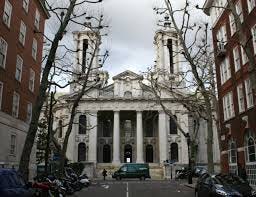
I see that St John’s, Smith Square is now known as Sinfonia, Smith Square. Originally a church, this Grade I listed building was designed by Thomas Archer and was completed in 1728. The building is sometimes referred to as “Queen Anne's Footstool” because legend has it that when Archer was completing his design he asked the Queen what she wanted it to look like. She petulantly kicked over her footstool and said “Like that!” Some think the building a masterpiece, others are not so keen. Charles Dickens, in Our Mutual Friend, described it as appearing to be "some petrified monster, frightful and gigantic, on its back with its legs in the air". Sir Hugh Casson wrote: “Admittedly, it looks a bit too large for the space it occupies – rather like some great piece of machinery that has been parked in this tiny domestic little square of brick-faced houses and white sash-windows. But this architectural outsize swagger is part of its fascination.”
I went by myself to a concert of Portuguese Polyphony performed by The Sixteen led by Harry Christophers at St John's Smith Square sometime in the 1990s, possibly 1993? The Sixteen are a British choir and period instrument orchestra. Founded by Harry Christophers, they started as an unnamed group of sixteen friends in 1977, giving their first billed concert in 1979.
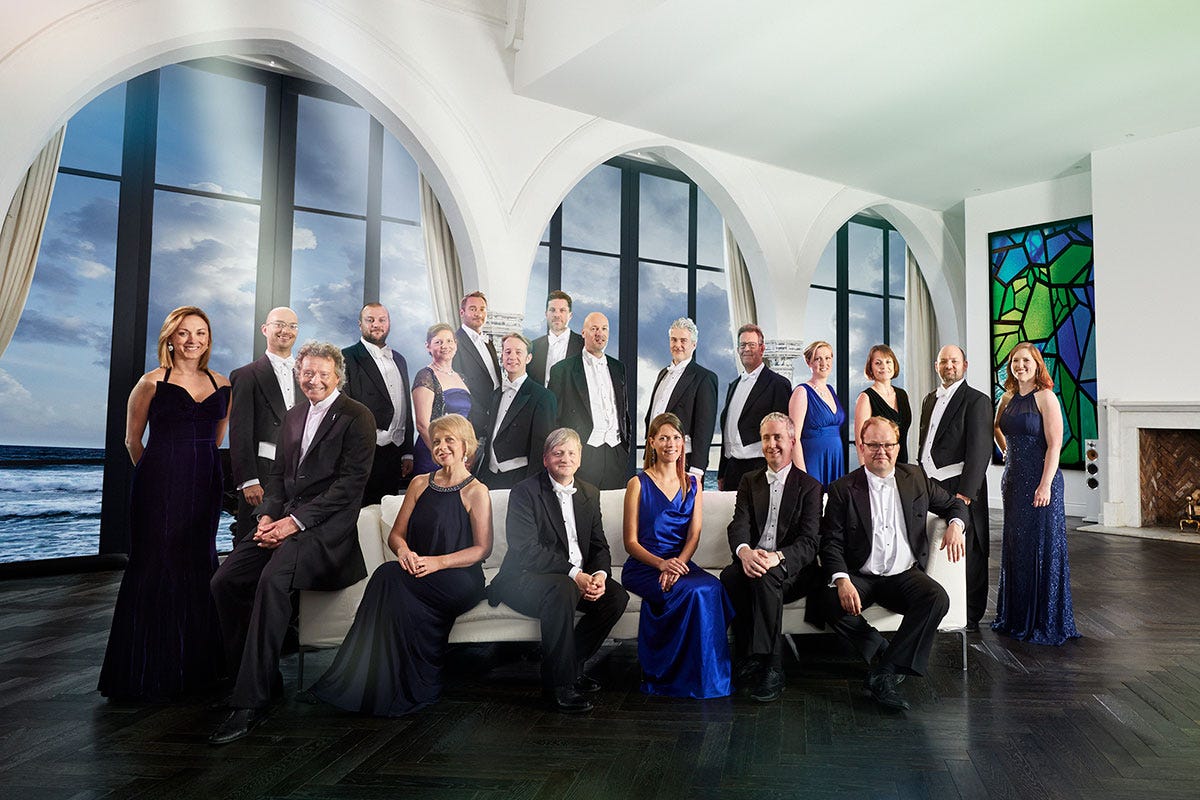
https://thesixteen.com/about-us/meet-founder-conductor/
I had never been to St John’s before and made a fool of myself by going in through the wrong door. I found myself being stared at by 32 eyes. The Sixteen. I was in the artistes' dressing room. I got over my embarrassment and very much enjoyed the music.
After the concert, I was walking past the Houses of Parliament when I heard someone call out, "Good evening to you." I turned around to return the greeting and saw that the person greeting me in such a friendly manner was the Reverend Martin Smyth MP, Grand Master of the Orange Lodge.
He had previously greeted me ten years before at the urinals in Stormont Castle. Did he recognise me after that brief encounter so long ago? Was he stalking me?
Another SSAC member of whom I was fond was Robin Wendt.
As well as being seriously brilliant, he was quiet, approachable and kind. I remember having breakfast with him at our Belfast hotel in 1983, his hair wet from the shower. I also remember the occasion when my difficult civil service boss cancelled a monthly SSAC meeting at short notice. Somehow, (thanks to my eccentric, possibly demented assistant) the message of the cancellation did not get through to Robin and he turned up at New Court eager to get down to business. My boss was furious that he should have been inconvenienced but Robin was not. He cheerfully said that he could relax and look around the London shops for a Christmas gift for his daughter.
When I knew him, Robin was CEO of Cheshire County Council, a post he had held since he was a mere boy of 38.He had been at the council since 1975. Previously he had been a star civil servant, reaching the grade of assistant secretary (Grade 5) at the DHSS (Department of Health and Social Security). He graduated in PPE from Wadham College (the alma mater of my headmaster, JA Stocks, who encouraged me to apply, but I was too feckless).
In 1962, Robin joined the Ministry of Pensions and National Insurance, which later became the DHSS. He became PPS (principal private secretary) to the Labour social services secretary Richard Crossman. Barbara Castle was Secretary of State for Social Services from 1974 to 1976. Castle introduced a wide range of innovative welfare reforms, and Robin Wendt was her right-hand man, working on the legislation.
Robin died in 2021 at the age of 80.
An interesting meander down memory lane. Who was Patten's push assistant? What was the leak that Nick Timmins informed you of? I joined The Times in 1985, aged 24, and knocked around the fringes of politics while writing for the PHS column.