
Goebbels
I have been reading Peter Longerich’s monumental, exhaustive and somewhat exhausting, biography of Nazi propaganda chief Joseph Goebbels.

Pace (that is Latin for “whatever about”) the famous song lyric, it seems that Joseph Goebbels did not suffer from gonadal agenesis, a rare condition where an individual lacks both gonads. Far from being testicularly challenged, the real life Doctor Goebbels was something of a babe magnet.
Hitler has only got one ball,
Göring has two but very small,
Himmler is rather sim'lar,
But poor old Goebbels has no balls at all.
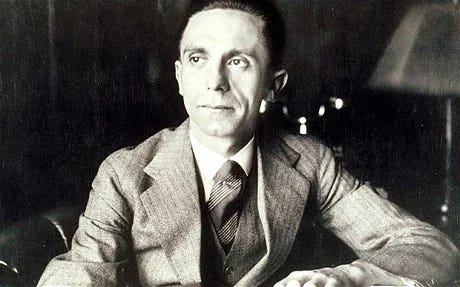
Dr Faust Shkaravsky was a Soviet pathologist who oversaw the autopsy on Hitler’s body in 1945. He told a World at War interviewer: “One of his testicles was definitely missing…Usually we find the testicle in the inguinal canal or in a duct but it was not there either. The testicle could have been in the abdominal cavity but we did not find it there so we drew the conclusion that he did not have one. There is such a philistine attitude that the absence of a testicle is seen as a vice, as a disgrace. None of Hitler’s people would have admitted to being in such a position.”
Longerich’s book relies heavily on the detailed diaries that Goebbels began to keep in the autumn of 1923 – 32 volumes in all. I cannot imagine what it would do to someone’s head having to wade through all that. Some reviewers thought this skewed the book somewhat. For me, it was entertaining to see Goebbels’s repellent personality on full display. The venom against Jews is horrendous.
Reading through the 715 pages of the biography, I can see uncanny parallels between Germany in the 1930s and the USA today. There is the same tyranny of delusion and Goebbels’s combination of moral weakness and cruelty is very similar to Trump’s. Both men suffer from extreme narcissistic personality disorder.
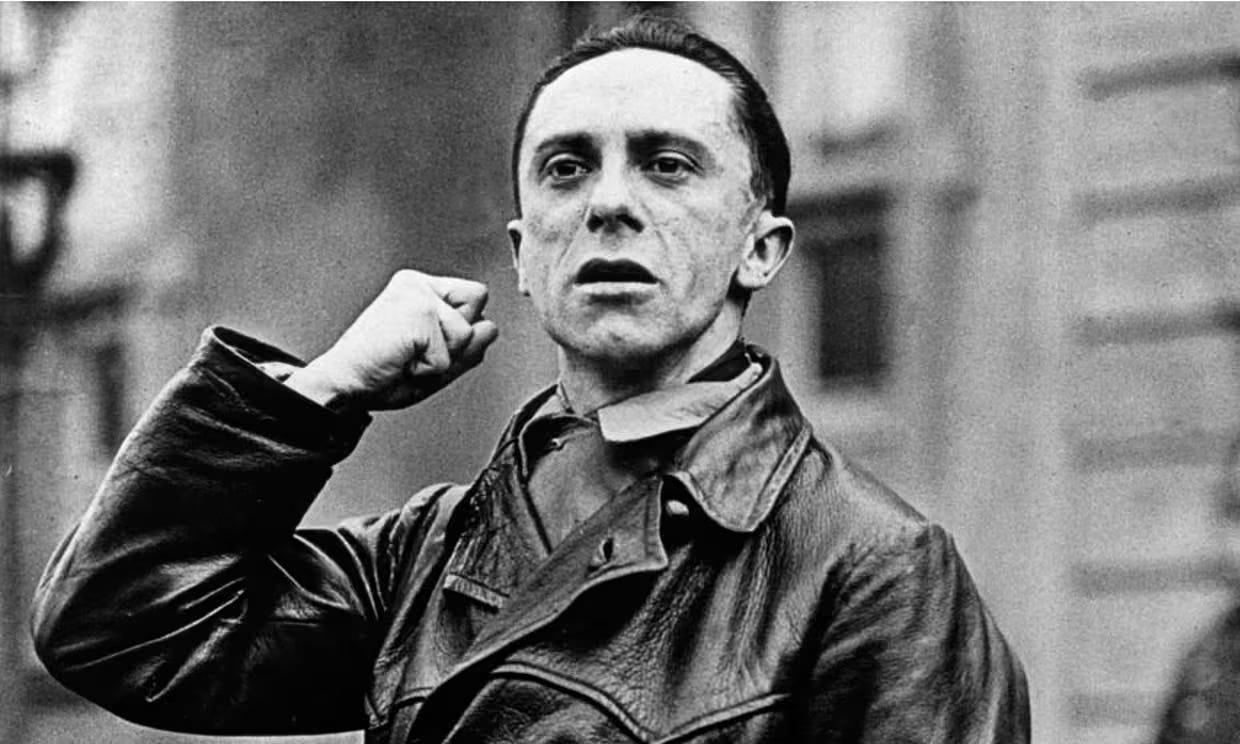
A Marriage of Untrue Minds
A lot of information about Dr Joe’s sex life is unreliable as it comes from his own voluminous diaries in which he displays quite phenomenal egotism and narcissism. He suffered terrible bouts of eczema and ‘barbaric’ kidney pains had him bedridden for days. He looked like an undernourished cleaning lady with a pockmarked face and thin lips. No disrespect to cleaning ladies. I do not wish to upset the differently attractive or those living with disabilities, but Goebbels was a weedy little fellow with a club foot and a body weakened by polio. It cannot be gainsaid, however, that he seemed to have fathered many children.
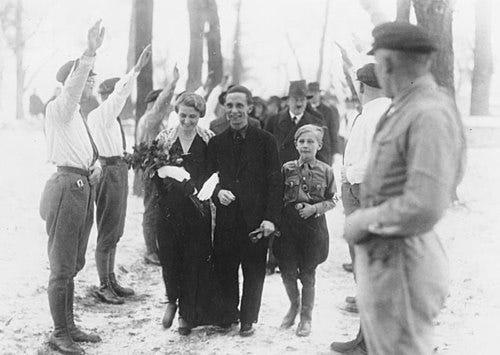
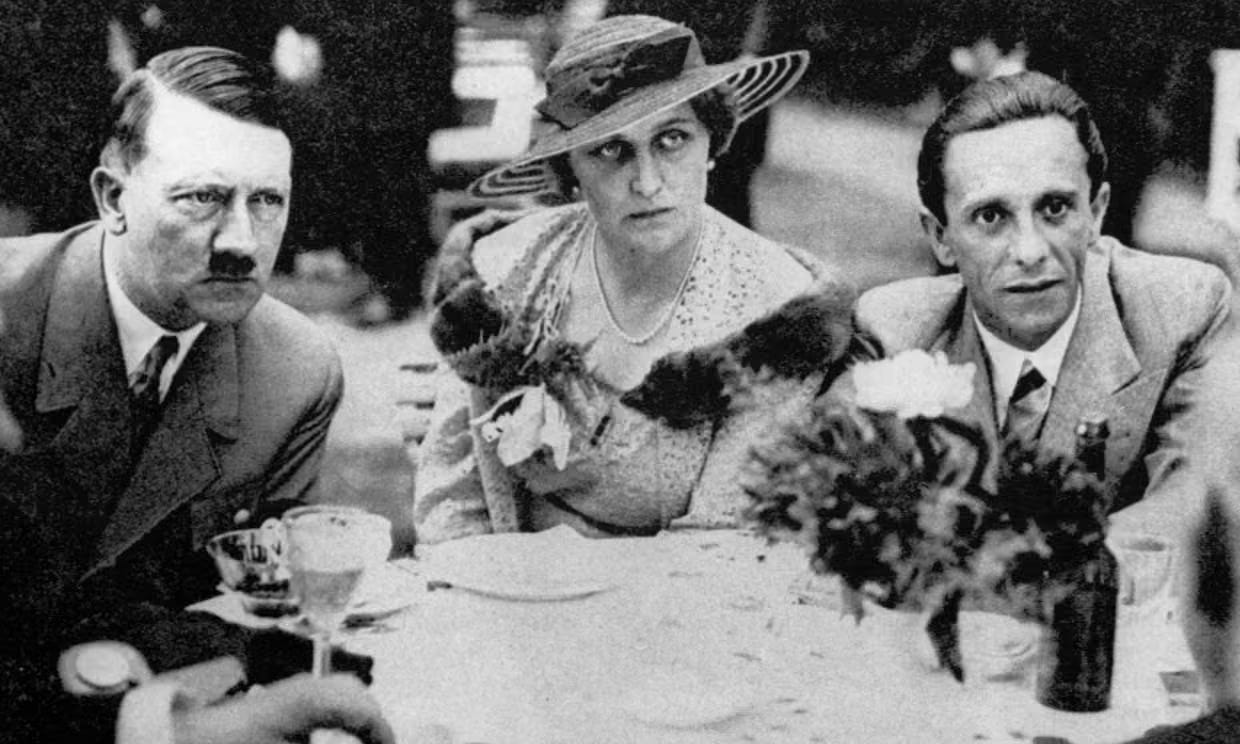
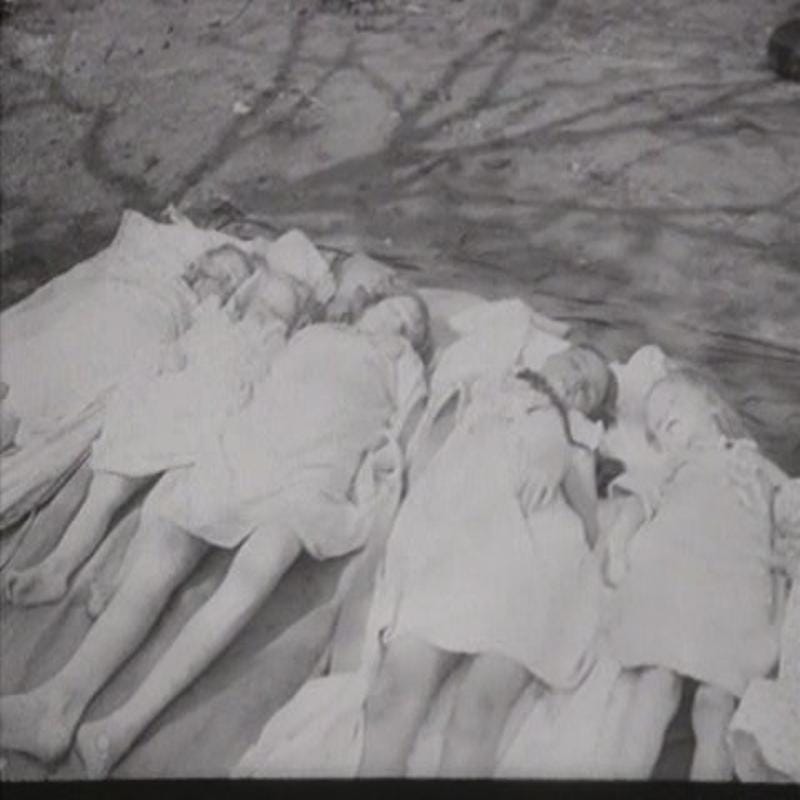
He married Magdalena Ritschel on 19 December 1931, with Hitler as a witness. They had six children who were all given forenames beginning with “H”. Magda also had a son called Harald from a previous marriage. This must have been very confusing when the postman called . Helga was born on 1 September 1932 – she was twelve years old when she was murdered; Hildegard was born on 13 April 1934 – she was eleven years old at the time of her murder; Helmut was born on 2 October 1935 – he was nine years old at the time of his murder; Holdine was born on 19 February 1937 - she was eight years old at the time of her murder. Hedwig was born on 5 May 1938 – she was six years old, four days shy of her seventh birthday, at the time of her murder; Heidrun was born on 29 October 1940 – she was four years old at the time of her murder.
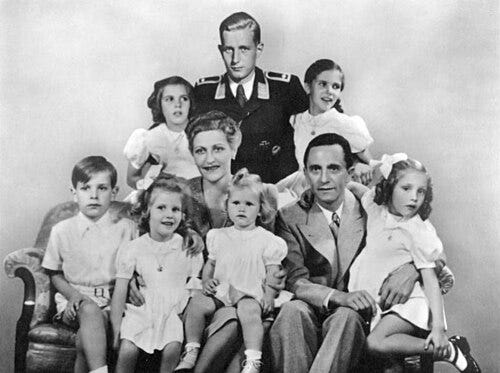
Goebbels’s children all died of cyanide poisoning on on 1 May 1945, the day both parents committed suicide in Hitler’s bunker.
Magda also had a son called Harald from her marriage to Günther Quandt (28 July 1881 – 30 December 1954). Harald survived the war and died in an air crash in 1967. Gunther Quandt was a German industrialist, member of the Nazi party and donor, who founded an industrial empire hat today includes BMW and Altana. Slave labour was essential to Quandt's success. Some historical sources claim that Magda had an affair with her 18-year-old stepson, Helmut, which led to her divorce. Shades of Gloria Grahame and Nicholas Ray.
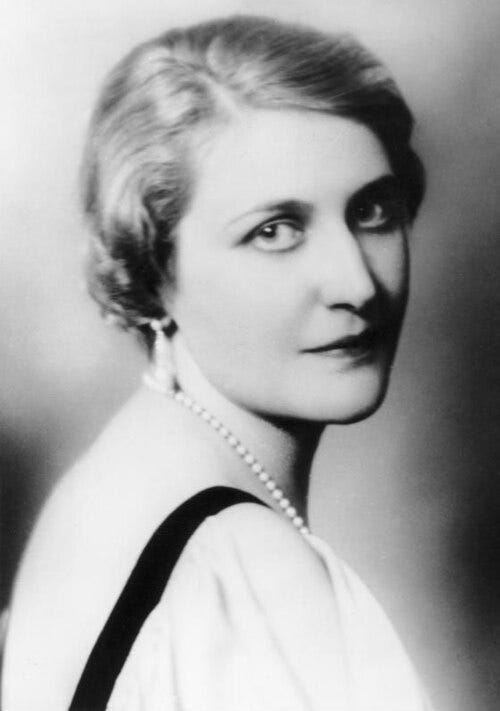
Ménage à Trois ?
Before he met Magda, Goebbels had many affairs: Anke and Else, Elisabeth and Alma, Dora and Tamara, Hannah and Johanna, Xenia and Erika. As Minister of Propaganda he had much influence over the film industry, giving him the opportunity to be the Harvey Weinstein of Nazi Germany. After his marriage to Magda, the Czech actress Lida Baarová became his mistress. Hitler once told Baarová: "You look like someone who played a major role in my life, a very significant role". Hitler was referring to his niece, Geli Raubal (who committed suicide). Baarová turned down Hollywood offers under pressure from the Nazi authorities, and later claimed to her biographer, Josef Škvorecký: "I could have been as famous as Marlene Dietrich."
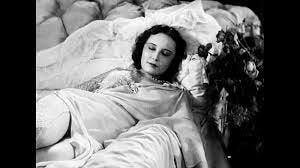
In 1938, Magda and Joseph tried to persuade Lida to enter into a sort of Ménage à Trois with Lida as the official mistress and Magda as the matriarch and de facto first lady of Nazidom. Magda reneged on the deal and went complaining to Hitler. Magda had been willing to put up with her husband’s sexual indiscretions, and had some of her own. When Goebbels began to show up in public with his mistress, Magda began an affair with Goebbels's state secretary Karl Hanke. Goebbels was humiliating Magda by his obsession with a racially inferior actress. Magda contended that this was a humiliation not just for her but also for the Führer. She confronted Hitler and threatened to go public about the scandal if she could not divorce Goebbels. This did not suit Hitler and there was a reconciliation of the Goebbellses. Baarová was deported.
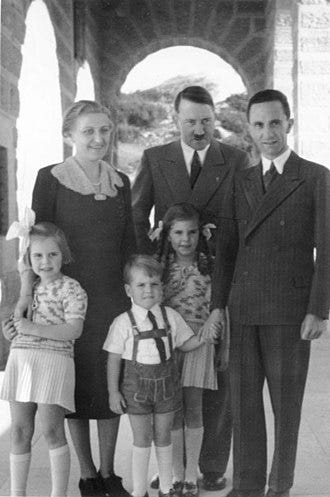
There had always been an intruder in the marriage. According to Longerich, Hitler had fallen in love with Magda but gave up his aspirations and imposed himself on the Goebbels family. They benefited from generous grants which enabled them to maintain their lavish lifestyle. Joseph noted that Magda often spent days, sometimes weeks, alone with Hitler as his guest. Magda joined the Nazi Party in September 1930. When she met Goebbels, she was at the time believed to be having an affair with the Jewish political activist Haim Arlossrof. On 16 June 1933, Haim Arlossrof was murdered by unknown assassins as he strolled on a beach in Tel Aviv with his wife. Not long after, Magda’s Jewish stepfather Richard Friedlander was arrested and sent to Buchenwald Concentration Camp where he died in 1938. There have been allegations that Friedlander was Magda’s biological father.
Hitler created a public image of a celibate man (a Morrissey of his day) without a domestic life, dedicated entirely to his political mission. Magda willingly did anything that would win her favour with Hitler. She was quoted as saying “Love is meant for husbands, but my love for Hitler is greater, I would give my life for it. . . . [W]hen it became clear Hitler can love no woman, but as they say, only Germany, I consented to the marriage with Dr Goebbels, because I can be close to the Führer.”
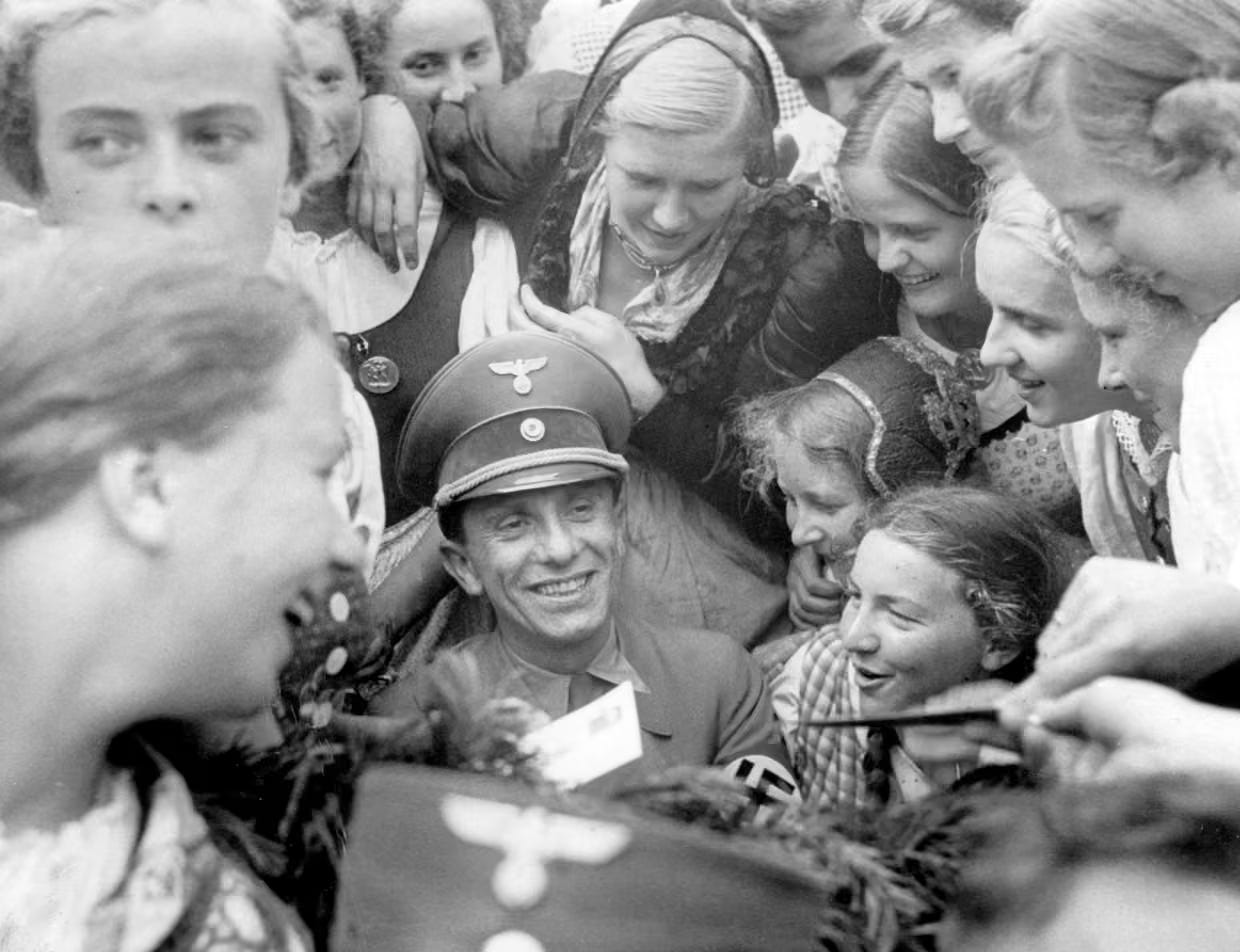
Because Joseph was such a sycophantic toady, he put up with Hitler’s presence in his marriage. “He’s so nice, it’s touching. He’s so lonely. Must have a wife. It can’t go on like this.” Joseph had to spend many hours listening to Hitler or watching movies with him. Magda often accompanied her husband and sometimes she called on Hitler without her husband or accompanied him to events. Hitler often joined them on family holidays. Joseph and Magda and their children (together with Uncle Adolf) became the Nazi First Family.
Not in the Loop
Goebbels’s importance has been exaggerated (not least by Goebbels himself). He was often a marginal figure. He played no part in the machinations that brought the Nazis to power or in the Night of the Long Knives, when Hitler murdered his rivals. Unlike his own rivals Göring , Himmler, Bormann and Speer, Goebbels never created a power base of his own independent of Hitler.
All of his toadying did not mean that Goebbels was privy to Hitler’s plans or that he always got the better of his many rivals. Goebbels remained a relatively isolated figure within the Nazi party because he had a gift for making enemies and did not inspire affection. He had no network of allies and was totally dependent on Hitler’s support, which was generally given but was not accompanied by a free backstage pass to what the Führer really intended to do. Hitler constantly lied to Goebbels, broke promises and misdirected him. Goebbels clashed with the coterie at party headquarters in Munich and with other leading figures, such as Gregor Strasser and Hermann Göring whom he called “a lump of frozen shit”.
Goebbels avidly shows in his own diary (although he does not seem aware of being a patsy) how Hitler played him like Putin plays Trump. Longerich writes: “The dictator almost always made attentive enquiries about Goebbels’s family and indulged in almost wistful reminiscences of the ‘days and evening he had spent with our family in the Reichskanzlerplatz.’” …Hitler used the conversations in a psychologically skillful way to convey the impression to his propaganda minister that he held a special position in the esteem of the Führer.” The realty was that Hitler believed that his power depended on the carefully balanced rivalry and tension that existed among the leadership. The irony was that although Goebbels had been seen as the leading advocate of “total war”, he was in danger of being blamed for the consequences of his ideas being watered down.
For Hitler himself “total war” must “not involve a war against women…as soon as you interfere with their beauty treatment you become their enemy.” Hitler was also wary of depriving the people of their consumer comforts.
Goebbels assumed that he was going to be part of the Committee of Three that Hitler set up to plan Total War. Goebbels considered much of this planning to be based on his ideas. He was not included but comforted himself with the thought that Hitler was going even further than he had suggested. Hitler told him that he did not want Goebbels to be “burdened by the administrative work of this great program.” Goebbels took credit to himself for relieving the negative mood of the public.
“Goebbels remained outside the inner circle of decision-makers as war approached. He knew nothing in advance about the Nazi-Soviet pact, for example; his role was to prepare the German people psychologically for war. After hostilities began he remained the great choreographer of enthusiasm and resolve.”
Goebbels failed to to get Hitler’s actual support in any of the disputes with rivals in which he was engaged even where Hitler had explicitly promised it. As Longerich puts it: “He had numerous similar disappointments since he had committed himself to his Führer in the mid-1920s. But his loyalty to his idol still appeared to be unshaken.”
Propaganda and Self-Delusion
There were campaigns that were comical in their cackhandedness. There was a collection of skis for the Wehrmacht. The Wehrmacht then announced that it needed substantially fewer skis than had been collected. The ones that had been collected were alpine skis designed for going downhill whereas cross-country skis were what were needed for winter warfare. Most soldiers could not ski and were an easy target for snipers. Hitler decided that left over skis were to be returned to the owners which was a logistical nightmare.
Goebbels’s ministry was responsible for public displays, rituals and mass rallies: the staging of politics that was such a feature of the Third Reich. Goebbels had a large part in constructing the image of a unified Volksgemeinschaft (“people’s community”). Often, what he congratulates himself for is not a concrete achievement in the world of reality but a deception successfully achieved. One is reminded of Trump’s obsessive delusions about crowd size.
Then there was the concept of Haltung, or right bearing, good morale. Goebbels would pay repeated visits to areas that had suffered from air raids. This was not really to help those afflicted but to reassure himself that “the population is extremely nice and friendly to me.” When the German Opera was hit in a raid that caused 250 deaths, Goebbels credited the saving of the building to his own personal intervention.
“There ought really to be a Party comrade standing in every line in front of shops, who can intervene and sort things out the moment disagreements occur or grumbling starts.” He dismissed anonymous critical letters as being from Jews.
Longerich writes: “In fact Goebbels was responsible neither for the actual air defense measures nor for the reestablishment of public life after air raids.” “By intervening everywhere, tirelessly encouraging people to act , putting pressure on the authorities, and pushing the Party into the foreground on top of that, in the hectic atmosphere of those days he perceived himself to be omnipotent.” He found the “attitude of the Berlin population towards me beyond praise.” Propaganda is beyond reality. Even at this stage when the war is obviously not going well, Goebbels is constantly praising his own speeches and their effect on his audiences. As Longerich puts it: ”The nation, which Nazism had welded into a community of struggle, was discovering that its sense of solidarity was increasing as a result of the efforts involved in fighting the war.”
Goebbels knew that disseminating the truth was not always good propaganda. He held back from publicising the atrocities carried out by Soviet troops “because I don’t anticipate it having the effect of spurring on our troops.” Hitler prevented Goebbels from stopping people sending packages and private telegrams. Hitler was not more soft-hearted than Goebbels but had more political nous. The dictator would not accept the propagandist’s plan to stop production of beer and candy. Hitler could see that it was bad propaganda if soldiers did not have candy to chew on route marches. Hitler had been bitterly opposed to the closing of theatres and music halls but eventually gave in to Goebbels. Would Goebbels have cancelled Jimmy Kimmel and Stephen Colbert?
Goebbels’s concept of total war involved “squeezing” hundreds of thousands of workers from the civilian sector (which inconveniently included armaments factories) to the “front line”. Sometimes he seemed to achieve his aims, but overall he gave an over optimistic assessment of what he had achieved.
In foreign policy, Goebbels was generally ineffective and naïve about maneuverings going on behind his back. One master plan, as total war was turning into total defeat, was to sow discord amongst the allies by pursuing a separate peace with the Soviet Union. Oshima, the Japanese ambassador in Berlin, offered his services in this endeavour. Hitler was happy to use Oshima to foster mistrust amongst the allies but totally ignored Goebbels’s plan. Goebbels realised he was being sidelined and knew that defeat was inevitable. Longerich drily comments: “In reality he might as well have shot himself at this point.
Thinking fondly of Robert Redford, I recall that exchange where Sundance says, “”you do the thinking Butch. It’s what you're good at.” One might imagine Hitler saying to Goebbels, “You do the propaganda, Joe. It’s what you’re good at.”
Unlike Donald Trump, Goebbels was a voracious reader and also turned his hand to writing novels, plays and poems. It was difficult to establish from his logorrhea what his political philosophy or agenda was. As Longerich puts it, his “Anti-Semitism provide him with a convenient substitute for a social analysis of which he was incapable.” His lack of systematic political ideas matched his personality which was geared to achieving personal recognition and attention. Hitler quickly recognised this and exploited it.
The last surviving entry in the Goebbels diary came on 10 April 1945. Eleven days after that, he, Magda and the children moved into the Führerbunker.
Longerich ends his biography with these words: “By following Hitler’s example and committing suicide with his family, he had confirmed for all time the special relationship he believed he had with his idol. In the end his self-delusion had won out.”
The Bunker Ending
When it was too late, after the July plot of 1944, Goebbels achieved his ambition of cocking a snook at his rivals when Hitler appointed him Reich Plenipotentiary for total war mobilisation. He could get his own men into the ministries of party rivals as other leading Nazis such as Göring, Speer, Rosenberg and Himmler lost Hitler’s confidence. Hitler was a spent force, but was capable of preventing Goebbels from doing what he wanted. Goebbels became more secure in a fragmenting world. The position he had always craved came only when it was clear to everyone but Hitler that Total War would be Total Defeat.
The last surviving entry in his diary came on 10 April 1945. Eleven days after that, he, Magda and the children moved into the Führerbunker


I’m leery of liking anything that mentions nazis but I love your writing.
That pretty well covers the ground. and all fascinating stuff. The fact that you have read Longerich's 750-page biography means that I don't have to, which is a relief.