
Easter 2019, Part Three
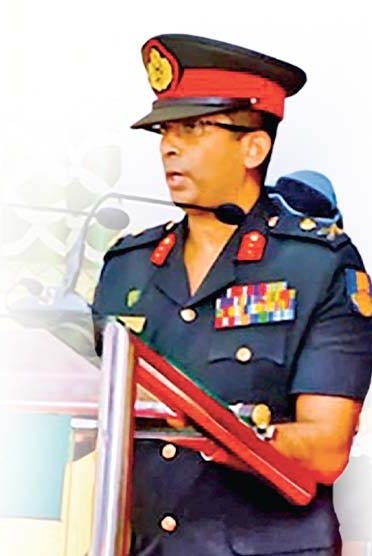
Major General (Retired) Suresh Sallay, is being investigated for conspiracy and aiding and abetting the 2019 Easter bomb attacks in Sri Lanka.

Easter 2019 Part Three
Major General (Retired) Suresh Sallay, the former head of the Sri Lanka State Intelligence Service (SIS), is currently detained under the Prevention of Terrorism Act (PTA). Sallay is being investigated for conspiracy and aiding and abetting the 2019 Easter bomb attacks.
Inquiries and Investigations
On April 11, 2019, the Indian Intelligence Services had warned the Sri Lankan government that suicide bombers affiliated with NTJ (National Thowheeth Jama’ath) planned to attack prominent churches and the Indian embassy in Colombo. No action was taken by the Sri Lankan authorities and 279 people died. This security lapse formed part of the remit of the Presidential Commission of Inquiry on the Easter Attacks which was appointed by President Maithripala Sirisena on 21 April 2019, tasked with investigating the causes and background for the bombings. The commission submitted an interim report two weeks after the attack. Its term was extended to until 31 May to complete its final report.
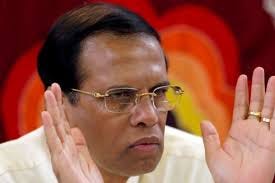
On the basis of the interim report, the Attorney General Dappula de Livera instructed the Criminal Investigation Department to carry out a criminal investigation against former Defence Secretary Hemasiri Fernando
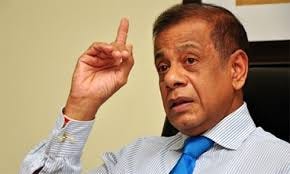
and IGP (Inspector General of Police) Pujith Jayasundera
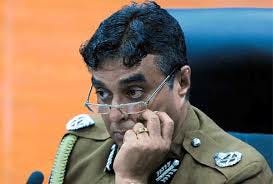
to determine if they failed to act on intelligence warnings about the attack.
The commission, which heard from 440 witnesses and handed over its final report to Parliament on Tuesday, February 2021, said the attorney-general should “consider instituting criminal proceedings against [former] president Sirisena under any suitable provision in the Penal Code”. The report said the “balance of probability” was that Sirisena was told by his intelligence chief about the warnings before the attacks
While Sirisena was heavily implicated, the report also faulted former Prime Minister Ranil Wickremesinghe for his “soft approach” toward extremism but did not recommend criminal action against him.
In May, 2019, a Parliamentary Select Committee (PSC) was established by by the Speaker of Parliament. The PSC was headed by the Deputy Speaker Ananda Kumarasiri and included seven MPs. The SLFP and the UPFA decided not to participate in the PSC. On 7 June 2019, President Sirisena called an emergency Cabinet meeting and protested at the PSC probe. He ordered that the PSC be terminated. He was critical of the PSC for summoning intelligence and police officers. He had ordered that no public officer appear for summons issued by the PSC.
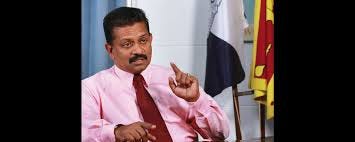
Sisira Mendis was Chief of National Intelligence (CNI) from July 2015 to June 2019. This is a high-level oversight role that coordinates multiple intelligence agencies, including the SIS, the Directorate of Military Intelligence (DMI), and others. When CNI Sisira Mendis made a statement at the PSC that President Sirisena knew about the warnings of an impending attack, Sirisena sacked him.
During Mendis’s tenure as CNI, the SIS (State Intelligence Service) was led by Nilantha Jayawardena (appointed in March 2015). Operating under the Ministry of Defence, the main goal of the SIS is to gather and analyse information to protect national security and support government policy. The PSC noted the failure on the part of the SIS to act upon the subsequent intelligence information received after an explosion on 16th April 2019 in Kattankudy. The PSC noted that the Director SIS bears the greatest responsibility. A full one year before the incident, he had requested the end of investigations by others into Zahran Hashim, who was already known for attacks against Buddhists and Sufis. This resulted in the SIS becoming the sole body investigating Zahran.
The PSC also noted that several politicians made comments after the Easter bombings which were inflammatory and irresponsible.
Incompetence and Compensation
On 12 January 2023, the Supreme Court of Sri Lanka ruled that Maithripala Sirisena, who was president at the time of the bombings, and several other government authorities at the time failed to act on intelligence, and were ordered to pay compensation to victims. Sirisena fully settled the 100 million rupee compensation payment in August 2024. Pujith Jayasundera (Inspector General of Police) was ordered to pay 75 million LKR; Nilantha Jayawardene (State Intelligence Chief) 75 million LKR; Hemasiri Fernando (Defence Secretary 50 million LKR); Sirira Mendis (Chief of National Intelligence) 10 million LKR.
While the civil compensation has been settled, victims and the Catholic Church of Sri Lanka continued to demand criminal investigations into a potential larger conspiracy.
It was not until November 2021 that the main trial involving the criminal prosecution of 25 men began. Prosecutors filed more than 23,000 charges against these suspects, including alleged mastermind Mohamed Naufar (also known as Naufar Moulavi) who is alleged to have ISIS links. He has been identified by US prosecutors as the “second emir” of a group of supporters who called themselves “ISIS in Sri Lanka”. Sri Lankan officials claim that Naufar was responsible for bringing ISIS ideology to the country as early as 2014.
The trial involves over 1,200 witnesses. Although indictments were served in October 2021, there have been many postponements because of the large number of charges. There have also been “practical issues” like a shortage of Tamil-speaking lawyers and translated documents.
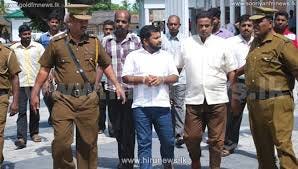
Sivanesathurai Chandrakanthan (commonly known as Pillayan) was arrested on April 8, 2025. Pillayan was born on 18 August 1975 in Pethalai, Batticaloa District. He joined the LTTE (Liberation Tigers of Tamil Eelam) in 1990 when he was 15. In 2004, he broke away from Prabakharan’s northern-based LTTE alongside Karuna Amman to form the Tamil Makkal Viduthalai Pulikal (TMVP). They both gave their support to the Mahinda Rajapaksa government and fought against Prabakharan’s Tigers. Both became ministers in Rajapaksa’s government. Pillayan ousted Karuna to become the undisputed leader of the TMVP in April 2007. Pillayan made history in May 2008 by becoming the first Chief Minister of the Eastern Province. Elected as an MP for Batticaloa in 2020 while in prison ,(detained for five years (2015–2020) for the 2005 murder of MP Joseph Pararajasingham but was acquitted in 2021) polling the highest number of preferential votes in the district. He served as the State Minister of Rural Road Development starting in April 2022. He lost his parliamentary seat in the 2024 general election.
Pillayan was was arrested on 8 April 2025 primarily in connection with the 2006 abduction and enforced disappearance of Professor Sivasubramaniam Ravindranath, a former Vice-Chancellor of Eastern University. He was detained under a 90-day detention order issued under the PTA. Government sources suggest there is also substantial information linking him to the 2019 Easter Sunday bombings. Allegations from whistleblowers suggest that Pillayan had prior knowledge and acted as a facilitator between intelligence officers and the bombers. Though initially detained on other charges, the government informed Parliament that new evidence links Pillayan’s paramilitary network directly to the 2019 attacks, specifically in recruiting and supporting the bombers. Pillayan’s former aide Hanzeer Azad Maulana, told Channel 4 that Pillayan met with members of the NTJ and arranged a 2018 meeting in Puttalam between the bombers and a top intelligence official (later identified as Suresh Sallay). It is alleged that these meetings were part of a plot to orchestrate a “national security crisis” to benefit the 2019 presidential campaign of Gotabaya Rajapaksa. Current Public Security Minister Ananda Wijepala says that investigations have revealed that Pillayan had prior knowledge of the 2019 Easter Sunday attacks.
Similarly, Lt Gen Hendavitharana, former Head of Military Intelligence, is being investigated for alleged strategic oversight and suspicious communications around the time of the attacks.
Catholic Church
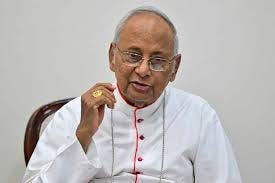
Cardinal Malcolm Ranjith claimed collusion. “The Parliament Select Committee report makes recommendations against the former President, former inspector general of police, former defence secretary, former chief of intelligence and other top-level officials, for not having prevented the attacks.“ His Eminence quoted excerpts from the report that indicate that the Government may have been motivated by electoral gain to collude in the atrocities.
Cardinal Malcolm Ranjith, the head of Sri Lanka’s Catholic Church, alleged that the massacre wasn’t purely the work of a few Islamic extremists but was part of a grand political plot and that the attacks were conducted intentionally to win votes. He alleged that the guilty parties were still engaged in political activities, held positions in the police and that the government covered up the investigations in order to protect the real culprits. The cardinal called on the UN to investigate the bombings.
An Ecumenical Matter
Ven. Omalpe Sobitha Thera, a prominent Buddhist monk, alleged that “selfish politicians directed the blind rage of religious extremists to achieve political ends,” and appealed to all religious leaders to support the struggle for justice led by the Cardinal, stating that justice should be sought in the International Court of Justice if it’s not found domestically. In March 2024, spokesman of the Catholic Church Fr. Cyril Gamini Fernando claimed that Gotabaya Rajapaksa was the mastermind behind the bombings and the subsequent cover-up.
Developments in 2026
The current Dissanayake administration has officially reopened investigations, alleging the attacks were a conspiracy by a “certain group” to seize political power. A previous presidential inquiry report has been handed to the CID for further action.
On Wednesday, 25 February 2026, Major General Suresh Sallay, the former head of the State Intelligence Service (SIS), was was taken into custody at dawn from a Colombo suburb. He is currently held under a 90-day detention order for questioning under the Prevention of Terrorism Act (PTA). He is being investigated for conspiracy and aiding and abetting the 2019 attacks. While initially held for 72 hours, a court later granted a 90-day detention order to allow for extensive interrogation. Investigators have officially named him as the third suspect in a broadening probe that links the Easter bombings to prior incidents, including the 2018 murder of police officers in Vavunativu. As is customary with high-profile detainees in Sri Lanka, Sallay has been admitted to hospital with a sudden illness. There will probably be a “fast unto death.”
Sallay has also been summoned to court in connection with the 2009 murder of Sunday Leader editor Lasantha Wickrematunge and the 2010 disappearance of cartoonist Prageeth Eknaligoda and the attempted murder of journalist Upali Thennakoon. The fact that he is also under scrutiny for those attacks, indicates a wider cleanup of the intelligence apparatus.
Previous investigations suggested that a specialized military intelligence unit (the Tripoli Platoon), which Sallay reportedly oversaw or was closely associated with as Director of Military Intelligence (DMI), was responsible for the surveillance and eventual hit on Lasantha in 2009.
Sallay, who was promoted to State Intelligence Service (SIS) chief in 2019 after Gotabaya Rajapaksa (Gota) became president, is accused of involvement in organising the suicide bombings, a charge he denies. A whistleblower Azad Maulana told Channel 4 in 2023 that Sallay had expected the attack to influence the 2019 presidential election in favour of Gota. Maulana was a former member of the jihadist group who said in 2019 that they were originally funded by a military intelligence unit to propagate a fundamentalist ideology in Sri Lanka’s multi-ethnic eastern province.
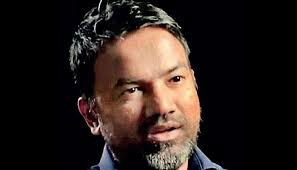
Sallay was employed in the intelligence unit that allegedly funded the jihadists. Two days after the bombings, Gotabaya Rajapaksa declared his candidacy and went on to win the November election in a landslide after promising to stamp out Islamist extremism.
Sallay is described by some as efficient, capable, and knowledgeable. His selection for the Military Intelligence Corps in 1993 was specifically due to his multilingual abilities, which allowed him to handle complex intelligence tasks across different linguistic communities.
Critics of Sallay’s Arrest
Gota’s then-justice minister Ali Sabry defended Sallay, saying he had contributed to the dismantling of the Tamil Tiger guerrilla network in 2009. “Undermining officers who once safeguarded the country may offer temporary political advantage, but it weakens morale within the armed forces.”
Sinhala Nationalist leader Wimal Weerawansa has alleged that the arrest is a “staged” event intended to appease the Tamil diaspora. Weerawansa argued that the ultimate goal of the investigation is to implicate former President Gotabaya Rajapaksa. He has alleged that efforts are underway to arrest former President Gotabaya Rajapaksa. Weerawansa defended Sallay’s actions, noting that intelligence work naturally requires contact with extremist elements and should not be treated as a crime. “Would someone like Easter attacks mastermind Zahran Hashim sacrifice his life to make Gotabaya Rajapaksa, who is known as a staunch Sinhala Buddhist, President? What is this nonsense?” he queried.
MP Dilith Jayaweera of the Sarvajana Balaya party warns that if the arrest is driven by “narrow political objectives” rather than credible evidence, it will severely damage the morale of Sri Lanka’s armed forces. Former SLPP MP Sanjeewa Edirimanna claimed the NPP government was creating a drama to divert attention from other controversies.
Sallay’s supporters, including some Buddhist clergy and leaders of the New People’s Front, have launched a 100,000-signature petition protesting at the arrest. They allege the government is attempting to use Sallay to implicate former President Gotabaya Rajapaksa. Former President Mahinda Rajapaksa has publicly defended Sallay, stating he “should not be imprisoned, but he should be appreciated” for his service.
Some argue that targeting high-ranking intelligence officers who “safeguarded the country” during the civil war weakens the integrity of national security institutions. Supporters of Sallay point out that extensive previous inquiries, including the Presidential Commission of Inquiry (PCoI) that recorded 457 testimonies, did not originally name Sallay as a primary suspect or person of interest. A petition challenging the legality of Sallay’s arrest and detention under the Prevention of Terrorism Act (PTA) was filed in the Supreme Court by a retired Air Force officer, Shantha Jayathilake, to challenge the legality of Sallay’s detention under the Prevention of Terrorism Act (PTA). Jayathilake argues that the PTA is intended for actions like those of the LTTE—which sought to overthrow the government—rather than the 2019 Easter Sunday attacks, which he characterizes as being based on religious extremism. He has requested that the CID be directed to present specific charges or release Sallay if sufficient evidence does not exist. Jayathilake was noted as the Commanding Officer of the SLAF Disaster Management Training School in Digana in late 2024 A three-judge bench ed by Chief Justice Preethi Padman Surasena, has fixed the petition for support on September 25. Sallay’s wife has indicated that her husband might be at risk of contracting Leptospirosis while in custody.
Sallay’s legal defense team following his February 2026 arrest includes several lawyers who have represented him before: Asith Siriwardene who said that he had encountered difficulties in gaining access to his client in detention. Sanjeewa Samarawickrama has held media briefings to provide evidence that Sallay was in India at Easter 2019, and his presence the National Defence College could be verified. Pasan Weerasinghe previously represented Sallay in civil litigation, suing Yasmin Sooka of the International Truth and Justice Project (ITJP) for allegedly defamatory remarks.
Salley’s arrest was welcomed by the Catholic church. “What we need is the truth behind the Easter attacks,” church spokesman Father Cyril Gamini Fernando told AFP. “We want to see justice for all the victims.” The church has accused successive governments of failing to identify the masterminds.
Watch this Space
The allegations of Sallay’s involvement in the 2019 Easter Sunday attacks have further fuelled suspicions about the role of military intelligence in the wider political and security landscape of Sri Lanka.
Sallay had been previously removed from a posting due to links with military-backed gangs causing unrest in Jaffna, before he was appointed the head of SIS by Gotabaya Rajapaksa. He held the post of Sri Lanka’s Director of Military Intelligence (DMI) when a wave of unrest swept through the Jaffna peninsula in 2016, which authorities blamed on the ‘Aava gang’.
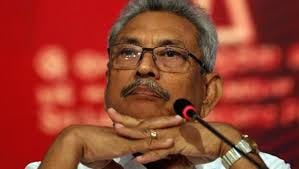
The presidential Rajapaksa brothers are at this time living in Sri Lanka. Gotabaya Rajapaksa appeared before the Commission to Investigate Allegations of Bribery or Corruption (CIABOC) on 17 March 2026. He recorded a statement regarding an ongoing investigation into the unlawful allocation of housing units in a residential complex. The probe concerns his time as Secretary to the Ministry of Defence, specifically allegations that he facilitated the allocation of Urban Development Authority (UDA) housing to ineligible individuals. He arrived at the Commission premises in the morning and spent over two and a half hours providing testimony before departing.
CIABOC is also bothering big brother Mahinda Rajapaksa. Former Sri Lankan Airlines CEO Kapila Chandrasena has given them a statement alleging that Rajapaksa received Rs. 60 million in bribes linked to a 2016 Airbus aircraft procurement deal. Mahinda has publicly stated that he has only “temporarily stepped away” and has not retired from politics. His family has frequently had to dismiss online rumours regarding his deteriorating health, consistently maintaining that the 80-year-old leader is fit and continuing his political engagements.