
Easter 2019 Part Four
As of 6 April 2026, Retired Major General Suresh Sallay, the former Director of Sri Lanka's SIS (State Intelligence Service), was still in custody under a 90-day detention.

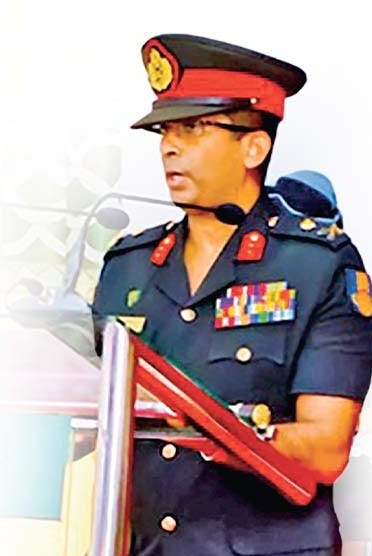
Sallay’s detention followed long-standing allegations, which suggested state complicity in the Easter 2019 bombings of churches and hotels.
On April 11, 2019, the Indian Intelligence Services had warned the Sri Lankan government that suicide bombers affiliated with NTJ (National Thowheeth Jama’ath) planned to attack prominent churches and the Indian embassy in Colombo. No action was taken by the Sri Lankan authorities and 279 people died.
Udaya Gammanpila’s Book
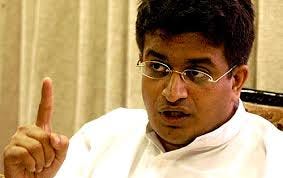
The book Pasku Praharaye Mahamolakaru Soyayema or Searching for the Mastermind of the Easter Attack by Udaya Gammanpila, former Minister and current leader of the Pivithuru Hela Urumaya party, was launched on 31 March 2026 at the Sri Sambuddhatva Jayanti Mandiraya in Colombo. The main thesis of Gammanpila’s book is that the Easter bombings were the work of NTJ leader Zahran Hashim and, despite what Cardinal Ranjith and others might allege, no Sri Lankan politicians had anything to do with the atrocities.
The event was attended by high-profile Sri Lankan figures, including Sajith Premadasa, the leader of the main parliamentary opposition party the SJB (Samagi Jana Balawegay). Premadasa’s presence was controversial within his own party. Former MP Navin Dissanayake was among those who took to social media to say that the book launch was a stunt to “whitewash the Rajapaksas”. He stated that it was not a revelation to name Zahran Hashim who had already been named. “Stating the bleeding obvious”, as Basil Fawlty might say. “This should have been held on April Fool’s Day”, said the former MP.
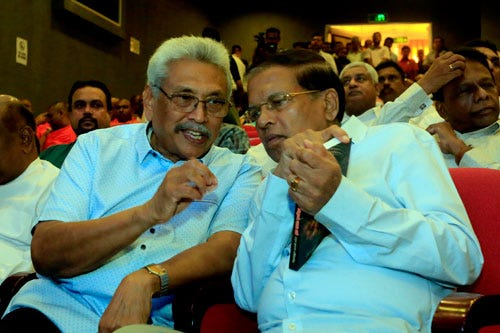
Also present were former Presidents Maithripala Sirisena, and Gotabaya Rajapaksa.
Gammanpila argues that Zahran Hashim, the leader of the NTJ (National Thowheeth Jama’ath) who died in the Shangri-La Hotel bombing, was the sole mastermind of the bombings. Gammanpila dismisses theories of an “invisible hand” or external political masterminds as misleading. As Mandy Rice-Davis might have said, “He would say that, wouldn’t he?” On the other hand, Gammanpila claims former CID Director Shani Abeysekara “paved the way” for the attacks, citing 11 specific reasons for this allegation.
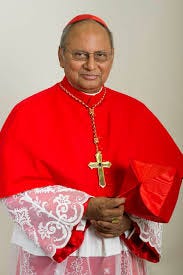
Cardinal Malcolm Ranjith has been the leading proponent of the view that the bombings were part of a “grand political plot” rather than the work of isolated extremists, and described Gammanpila's book as an attempt to mislead the public. His Eminence has specifically suggested that the attacks were used to create chaos and fear in order to improve the electoral prospects of Gotabaya Rajapaksa in the 2019 presidential election. The Church has raised specific, unresolved issues that Gammanpila’s book does not adequately address.
Zahran had been attacking Buddhists and Muslims who did not share his views. He changed his tactics to take on “the Christian West” to ingratiate himself with ISIS. Christian churches and luxury hotels catering mainly to Western tourists were selected as targets. He referred to Christians as siluvai vanangihal (worshippers of the cross) and Hindus and Buddhists as silai vanangihal (worshippers of statues). Zahran called for the destruction of Kaffirs. Kaffir is the the name of a specific ethnic group in Sri Lanka—descendants of African slaves and soldiers. Zahran used the term to describe any non-believers. Anyone who did not follow his restricted interpretation of the Koran was a legitimate target. He said that even if the Kaffirs were good people who were friendly and helpful towards Muslims, they had to be destroyed when necessary.
MP Mujibur Rahman argued the book lacks credibility because Gammanpila previously served as a lawyer for former intelligence chief Suresh Sallay, who is currently under investigation for “conspiracy and aiding and abetting” the bombings. A senior government official said there is a clear attempt by Gammanpila to distract from the investigations by making various allegations. He hinted that the former MP could himself be investigated soon.
Wider Implications
Shani Abeysekara was appointed Director CID in 2017 and served in that capacity till he was transferred on 21 November 2019, following the election to the presidency of Gotabaya Rajapaksa. He received a commendation from the Secretary-General of INTERPOL for his support to the Response Team that dealt with the Easter Sunday attacks.
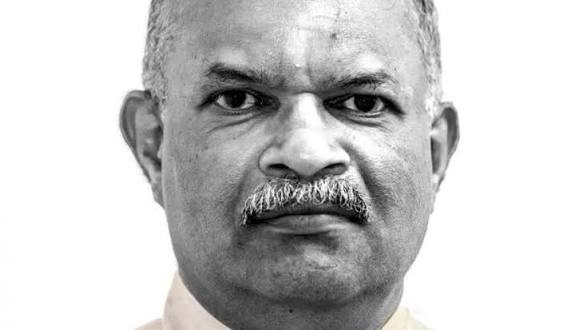
He had been the key prosecution witness in over 100 trials including over 20 murder trials that led to convictions. Abeysekara investigated many high-profile crimes including the attempted assassination of President Kumaratunga in 1999; the LTTE attack on Bandaranaike Airport attack in 2001; the Udathalawinna massacre in 2001, in which Lohan Ratwatte, subsequently a loose cannon of a minister in the governments of both Rajapaksas, was involved; the Royal Park murder in 2005 (the convicted culprit was pardoned by then president Sirisena, a pardon which was condemned as “illegal and unjustifiable” by current president Dissanayake; the attempted assassination of General Sarath Fonseka; the Angulana double murder; the disappearance of Prageeth Eknaligoda; the brutal assassination of editor Lasantha Wickrematunge.
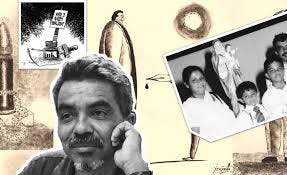
The Government of President Gotabaya Rajapaksa accused Abeysekara of carrying out a political agenda. In January 2020, he was suspended from the police because of leaked telephone conversations with Ranjan Ramanayake, a popular Sri Lankan actor, film director, singer, and politician. The Nugegoda Magistrate’s Court, following a request made by the Colombo Crimes Division, issued an injunction preventing Shani Abeysekara from traveling abroad. Abeysekara was arrested on July 31, 2020, by the Colombo Crimes Division and produced before the Gampaha Magistrate’s Court on suspicion of fabricating evidence against suspects in the murder of businessman Mohamad Siyam in Bambalapitiya in 2013. Human rights organisations expressed concerns that these charges were politically motivated. He was released on bail in June 2021 after nearly a year in detention. The Court of Appeal issued a scathing critique of the case against him, stating the allegations were a “result of falsification and embellishment” and a “blatant attempt to frame allegations through fabrication of false evidence”.
He initially returned to the police force in October 2024 on a contractual basis as the Director of the Central Criminal Intelligence Analysis Bureau before his eventual permanent reinstatement.

It surely can be no coincidence that there were delays in the investigation of the Easter bombings just as there was no conclusion to the investigations into the assassination of Sunday Leader editor Lasantha Wickrematunge. It looks very much as though Shani Abeysekara was impeded in both investigations. He was known for his professionalism and experience. Other officers who had been closely involved were also transferred or marginalised. Complex cases need continuity and institutional knowledge.
Sallay and Lasantha
As well as the Easter bombings, Sallay has also been summoned to court in connection with the 2009 murder of Sunday Leader editor Lasantha Wickrematunge and the 2010 disappearance of cartoonist Prageeth Eknaligoda and the attempted murder of journalist Upali Thennakoon. The fact that he is also under scrutiny for those attacks, indicates that the current government is looking at a a wider cleanup of the intelligence apparatus.
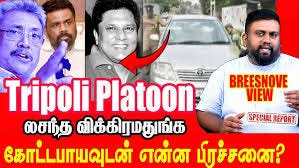
Investigations previously suggested that a specialized military intelligence unit known as the Tripoli Platoon, which Sallay reportedly oversaw or was closely associated with as Director of Military Intelligence (DMI), was responsible for the extended surveillance and eventual hit on Lasantha in 2009.
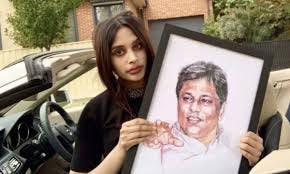
Lasantha’s daughter Ahimsa has consistently linked high-ranking officials from the Rajapaksa era to her father’s murder and subsequent cover-ups. She tried to prevent Gota from contesting the presidency in 2019. She has condemned the promotion and retention of individuals like Suresh Sallay within the intelligence apparatus. In public letters and statements, she has accused successive governments of protecting intelligence officers, including Sallay, from accountability. She wrote a strongly worded letter to the President in 2018 against the transfer of CID investigator Nishantha Silva, which she saw as an attempt to undermine investigations into the military and intelligence services.
Sallay, who was promoted to SIS chief in 2019 after Gotabaya Rajapaksa (Gota) became president, is accused of involvement in organising the suicide bombings, a charge he denies. A whistleblower Azad Maulana told Channel 4 in 2023 that Sallay had expected the attack to influence the 2019 presidential election in favour of Gota. Maulana was a former member of the jihadist group who said in 2019 that they were originally funded by a military intelligence unit to propagate a fundamentalist ideology in Sri Lanka’s multi-ethnic eastern province. Sallay was employed in the intelligence unit that funded the jihadists, and the government at the time admitted the military was behind the radical group. Two days after the bombings, Rajapaksa declared his candidacy and went on to win the November vote in a landslide after promising to stamp out Islamist extremism.
Sallay is described by some as efficient, capable, and knowledgeable. His selection for the Military Intelligence Corps in 1993 was specifically because of his language skills, which allowed him to handle complex intelligence tasks across different ethnic communities.
It is noticeable that many of the critics of Sallay’s detention and of the notion of a hidden hand beyond the jihadists were complicit in the Rajapaksa governments: Ali Sabry , Wimal Weerawansa, Udaya Gammanpila. How on earth could Lasantha’s brutal slaying remain unsolved after 17 years? How could the guilty parties be kept secret? Loose lips usually betray such secrets. One does not have to be a conspiracy theorist to believe someone has been hiding something.
Colombo Fort Magistrate Isuru Neththikumara also rejected a request made by Mr Sallay’s lawyers to remove the Easter Sunday attack investigation from the supervision of CID Director Shani Abeysekara.
The Colombo Fort Magistrate’s Court has ordered the CID to produce Sallay in court on 22 April 2026.