
Bloomsday
A happy Bloomsday to each, all and several.

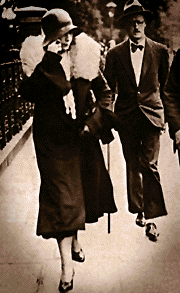
On June 16, people all over the world, but particularly in Dublin, celebrate the day on which James Joyce’s novel Ulysses is set. Joyce chose the date because it was on Thursday, June 16, 1904, that he had his first sexual encounter with his wife-to-be and mother of his children, Nora Barnacle. Joyce’s father commented, “well, she’ll stick to him anyway.” The novel traces the wanderings around Dublin on that day of Joyce’s modern-day Ulysses, Leopold Bloom.
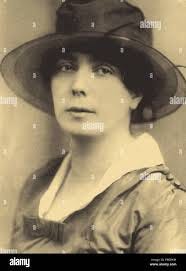
The first mention of a celebration of the anniversary of Nora putting her hand in Joyce’s trousers was in a letter from Joyce to Harriet Weaver dated 27 June 1924, which refers to "a group of people who observe what they call Bloom's day – 16 June. They sent me hortensias, white and blue, dyed".
The first major celebration of Bloomsday came in 1929. Adrienne Monnier, the partner of the publisher of Ulysses, Sylvia Beach, published the French translation. She organised a ‘Déjeuner Ulysse,’ a luncheon at the Hôtel Léopold near Versailles on the 29th rather than the 16th. A good choice of hotel.
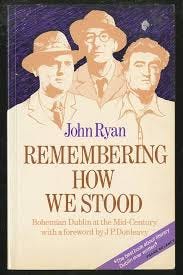
Things really got going in 1954. I have just finished rereading John Ryan’s memoir, Remembering How We Stood. That title always makes me want to answer, “with great difficulty.” The people Ryan socialised with were great drinkers, who did not live to enjoy old age – Flann O’Brien (Brian O’Nolan, Myles na Gopaleen – he has been described as a “serial pseudonymist”), Patrick Kavanagh, Brendan Behan, Gainor Crist (the model for JP Donleavy’s The Ginger Man). On the 50th anniversary of the events in the novel, a Wednesday in 1954, Ryan organised a peregrination around Dublin based on Leopold Bloom’s wanderings on June 16, 1904.
John Ryan described O’Nolan’s tipsy walk : “He had the most curious way of walking. His legs seemed to be taking off on independent courses – unrelated to the desired destination of the rest of the body. In later years, when he was somewhat the worse for wear, I have seen him ‘hove-to’, that is to say, maintaining position but making slight headway in a sea of pedestrians, while apparently going astern. This complicated manoeuvre was always conducted with the special gravity that the slightly inebriated give to their ambulatory occasions.” He was often a good deal more than “slightly inebriated”.
More about Brian O’Nolan (Myles na Gopaleen, Flann O’Brien) here:
https://pcolman.wordpress.com/2013/09/30/flann-obrien-and-catholicism/
John Ryan describes the plan: "There were still a few horse cabs plying the streets for hire in those days (the one-horse ‘brougham’ was as peculiar to Dublin in Joyce’s day as the hansom cab was to London in Conan Doyle’s); so we chartered two splendidly decrepit examples, all black and verdigris, straw stuffing bursting through the upholstery and the indispensable ‘jarveys’ with watery eyes and noses that they had spent a lot of time and money colouring. We agreed that the company should consist of ourselves, A.J. (Con) Levanthal, Anthony Cronin, Patrick Kavanagh and Tom Joyce. Con Levanthal, being Jewish, was to symbolize Bloom; Cronin, the young poet, his surrogate offspring Stephen; Myles enjoined Simon Dedalus and Martin Cunningham; I was Myles Crawford (for I had been an editor); Kavanagh—the muse, and Tom Joyce, The Family; for he was a cousin of James—a dentist who had, in fact, never read Ulysses!"
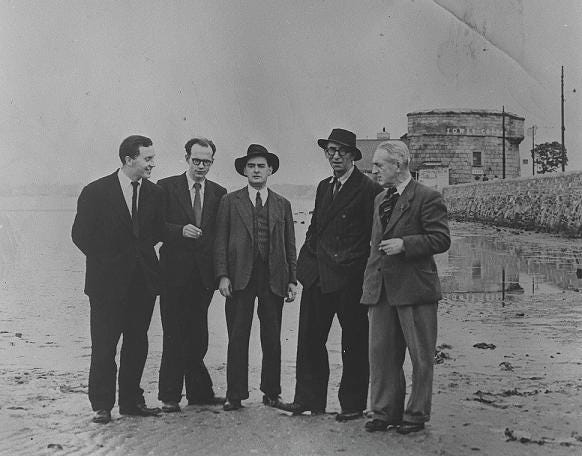
The first Bloomsday. Left to right John Ryan, Anthony Cronin, Flann O’Brien, Patrick Kavanagh,Tom Joyce(some identify the man on the right as AJ ‘Con’ Leventhal).
The pilgrimage was abandoned halfway through, when the weary pilgrims succumbed to inebriation and rancour at the Bailey pub in the city centre, which Ryan then owned, and at which in 1967 he installed the door to No. 7 Eccles Street (Leopold Bloom's front door), having rescued it from demolition. A Bloomsday record of 1954, informally filmed by Ryan, follows this pilgrimage.
O’Nolan’s tipsy walk is much in evidence in the film. Sometimes he can hardly stand or speak. It is a miracle that he wrote so much brilliant work and that such a melancholy man could be so funny. He adapted Joyce’s “silence , exile and cunning” to “silence, exile and punning”.
John Ryan describes the 1954 Bloomsday:
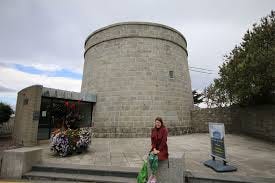
"Our ‘pilgrimace’ (to use Andrew Cass’s expression—in our case most applicable I think, being a pilgrimage, a grimace and, to some extent, a disgrace,) departed from the Martello Tower, from the parapet of which Buck Mulligan presides over the opening ceremonies of the book. This is the ‘Telemachus’ chapter. Our plan thereafter was to take in the ‘Nestor’ episode in nearby Dalkey, proceed directly to the ‘Proteus’ section of Sandymount Strand, thus to Eccles Street (the beginning of the ‘Calypso’ chapter) and then in one broad swathe, take in the ‘Lotus Eaters’ (Westland Row and environs), ‘Hades’ (Glasnevin cemetery), ‘Aeolus’ (the Freeman’s Journal office—we proposed to substitute the Irish Times for that defunct organ), pausing for lunch and liquid refreshments at ‘Lestrygonians’ (Davy Byrnes, the Bailey). Our leisurely afternoon would be taken up with ‘Scylla and Charybdis’ (The National Library), ‘The Wandering Rocks’ (no fixed abode—so our plan for that was to ascend Nelson’s Pillar and drink toasts in Cork whiskey to the four quadrants of Dublin), afterwards to the Ormond Hotel for the "interlude of the ‘Sirens’, and then to the nearest extant pub in the vicinity of that dried up well, Barney Kiernan’s ‘Court of Appeal’ for the explosive ‘Cyclops’ scene—back quickly to Sandymount for ‘Nausicaa’, then onwards to Holies Street Hospital (a passing glance only) for the ‘Oxen of the Sun’, thence to Mabbot and Mecklenburg Streets—Dublin’s vanished ‘nighttown’—for a moment’s silence for Bella Cohen, then for ‘Eumaeus’—a late-night cup of coffee at some stall (the cabmen’s shelter is also gone) and finally to number seven Eccles Street for some conviviality and to celebrate the return to ‘Ithaca’ and ‘Penelope’, thus ending our Odyssey."
https://pcolman.wordpress.com/2013/10/18/james-joyce-and-dublin/
Over the years Bloomsday has been celebrated in different ways in many countries. BBC Radio Four devoted most of its broadcasting on 16 June 2012, to a dramatisation of Ulysses, with additional comments from critic Mark Lawson talking to Joyce scholars. In the dramatisation, Molly Bloom was played by Niamh Cusack, Leopold Bloom by Henry Goodman, Stephen Daedalus by Andrew Scott (a Dublin man who has attained great fame since), and the Narrator was Stephen Rea
There is a website for the 2025 Bloomsday:
https://www.bloomsdayfestival.ie/
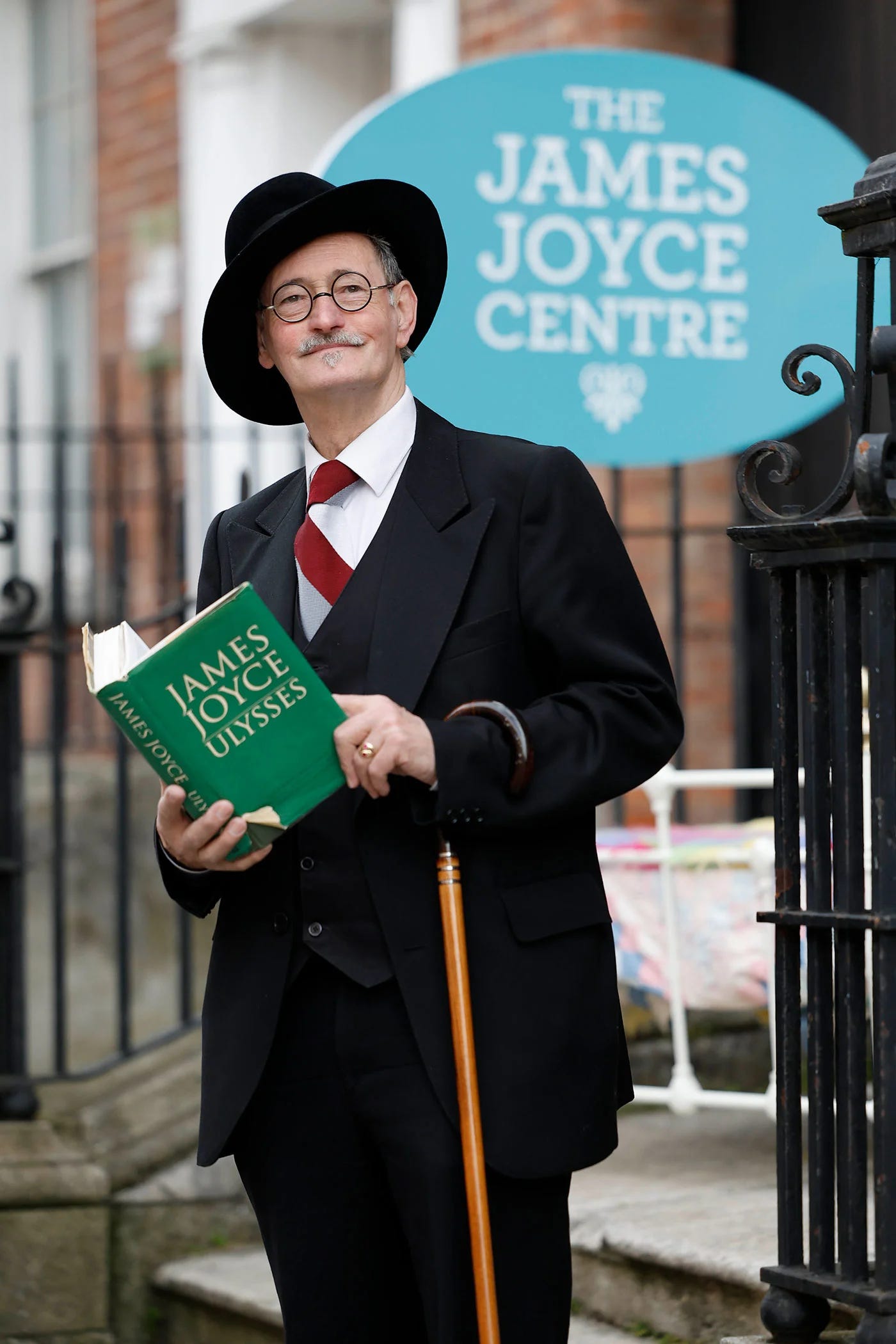
“For this year’s festival, we are delighted to partner with Olhausen’s Sausages, as experienced on the original Bloomsday! ‘(Bloom) disappears into Olhausen’s, the porkbutcher’s, under the downcoming rollshutter. A few moments later he emerges from under the shutter, puffing Poldy, blowing Bloohoom. In each hand he holds a parcel…’”
The organisers claim: “It is one of Dublin’s largest festivals, boasting of nearly 100 separate events throughout the city and drawing in thousands of visitors from around the world. Given its scope and focus of a particular novel and city, Bloomsday is unparalled in the world as a literary and cultural festival.”
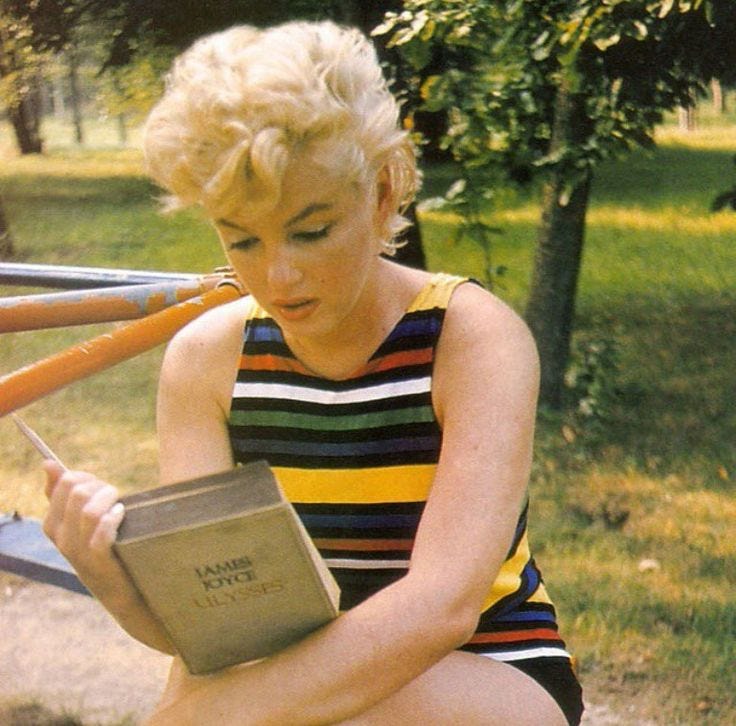
I have a history with the book. I first started to read Ulysses in 1962, mostly on the pebbly beach at White Point, Cobh, County Cork where there was no Gertie McDowell to excite me. Looking across the water, I could see the fortifications at Haulbowline that were built, like the Martello Towers, to repel Bonaprte. There is a Martello Tower nearby at Bellvelley. Gloucester public library contacted me asking me to return the book as someone else had reserved it. I read the book again for my Eng Lit A level special paper in1966 and got a Grade 1. I chose the book as a school prize which was presented to me by Sir Maurice Bowra. I saw Joseph Strick’s film of the book and did not like it much, although Milo O’Shea, Barbara Jefford (saw her live at the Oxford Playhouse in Robert Lowell’s adaptation of Racine’s Phèdre) and Maurice Roëves were good. I have read the novel in the annotated Penguin paperback edition. I have read it on Kindle making my own annotations. I have listened to Jim Norton (the leporiphobic Bishop Brennan in Father Ted) reading the whole book on Naxos CDs. I am looking forward to immersing myself in the centenary edition (with lots of interesting essays) from the Cambridge University Press (must take care not to drop it on my foot.
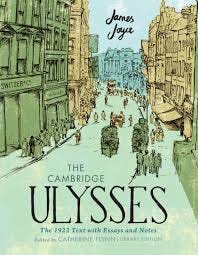
The excellent Declan Kiberd has written a book on how Ulysses relates to our lives. Anthony Burgess wrote an illuminating commetary in Here Comes Everbody. I read Richard Ellmann’s biography of Joyce and listened to the updated version (complete with smutty letters) on Audible. I say all of this this not to boast or to claim expertise but to counteract the boasts of people who say the book is useless and pretentious.
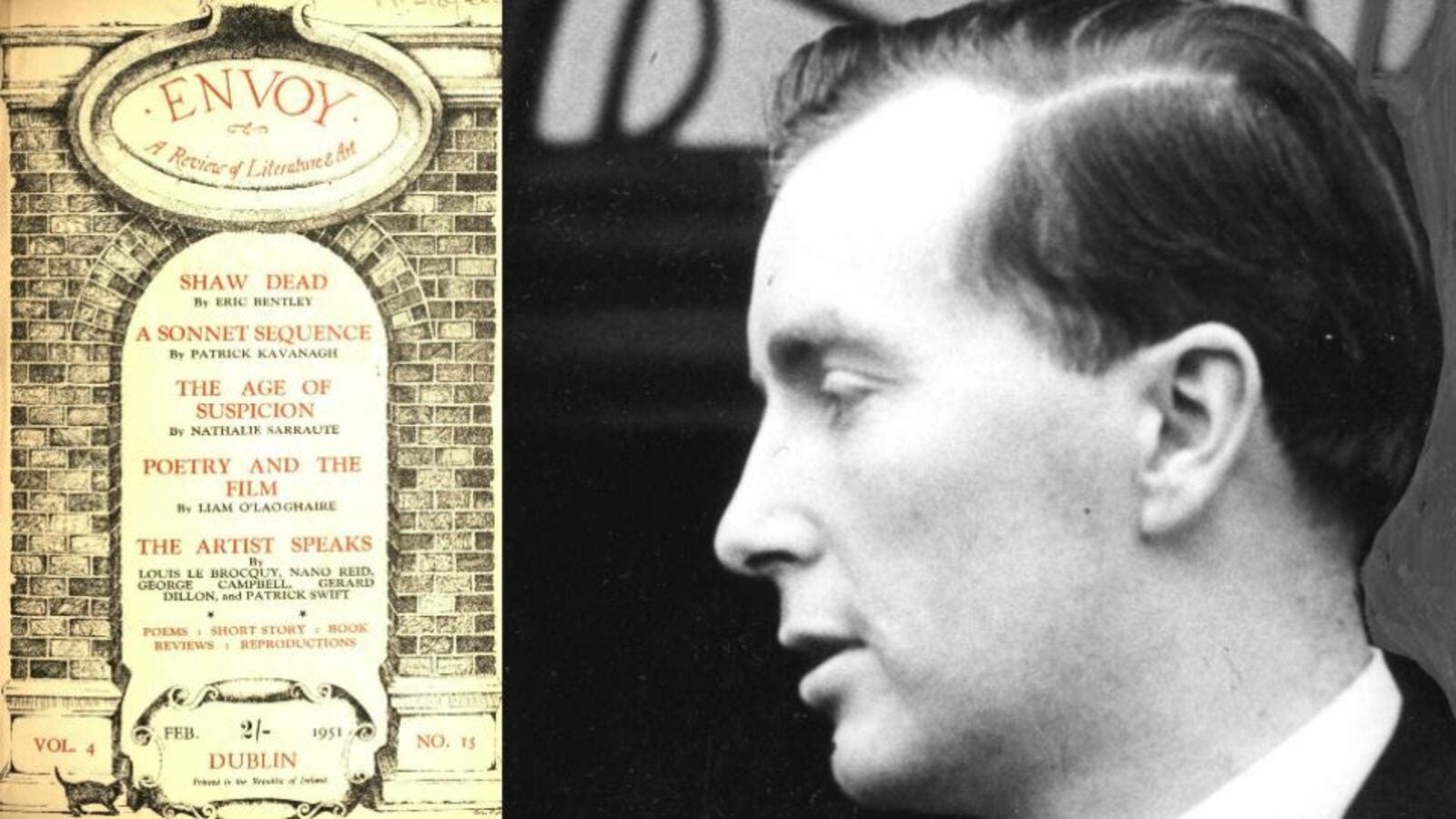
John Ryan founded an influential Irish literary magazine, was a distinguished painter and owner of The Bailey pub which features in Ulysses. His sister was the actress Kathleen Ryan, who appeared in many British and Hollywood films including Carol Reed’s Odd Man Out. John Ryan also loves Ulysses. "And because Ulysses came to me clean and unencumbered, with no layers of pseudo-scholarship to contend with, while my mind was white, original and virginal, unseduced by the hindsight of others, and was able to entertain, with respect—but not too much awe, the almost preposterous assumptions that the book was making—the most hilarious, as far as I was concerned, being the tacit one that we were now engaged, inter alia, in folding up the route map of the English language, a chart we would not be needing these next several hundred years."
In our day you could have said John Stanislaus Joyce was a rolling stone. https://gallagherpdx.substack.com/p/fathers-day-james-joyce-loved-his
Great stuff, Michael. I remember Walter Ellis writing a piece for the Sunday Telegraph in one 1,200 word sentence. The Scottish deputy editor, who was pissed, blew a gasket when he read it (he was a fine journalist but not a man of letters). It was retrieved from the spike the following morning by the editor, Sir Peregrine Worsthorne, who was. One of Walter’s finest offerings.