
Another Death Bus Crash
More bus slaughter in Sri Lanka.

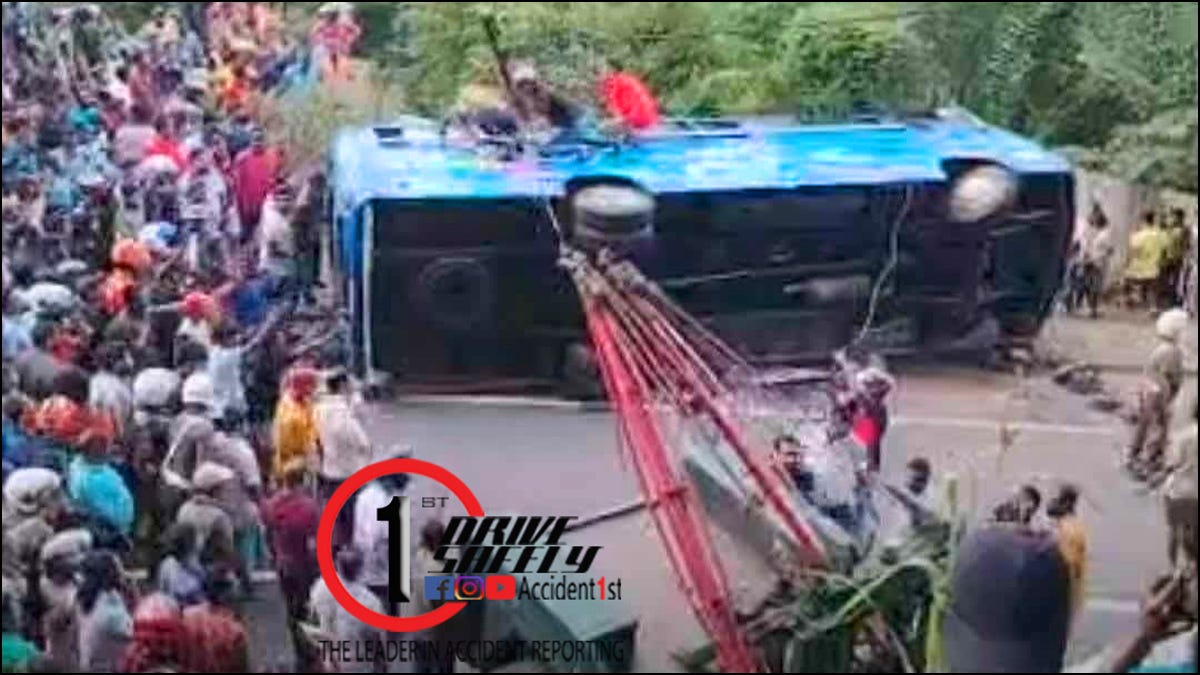
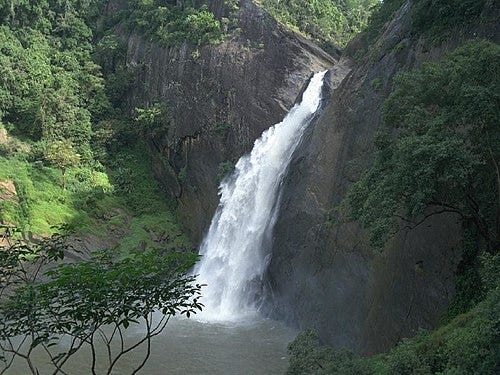
Three people were killed and 34 injured when a bus carrying pilgrims went down a precipice after crashing into an electric pole along the Badulla–Mahiyanganaya main road near the Dunhinda Falls on Saturday June 21, 2025. The bus toppled down a precipice at the 4th Mile Post area, near the Dunhinda bends on the Badulla–Mahiyanganaya road.
The passengers were pilgrims travelling from Badulla to Anuradhapura. The victims, residents of Pahalagama area in Thambuttegama, Anuradhapura, were returning home after a pilgrimage to the Mahamewuna Asapuwa in Ella Kumbalwela and a visit to the Muthiyangana Rajamaha Viharaya in Badulla.
The injured were admitted to the Badulla Teaching Hospital, and police said several were in a critical condition.
The driver and conductor of the bus escaped unharmed.
Sri Lankan Killer Buses

Other bystanders are warning that water might interfere with the necessary surgery. The mother has since died.
I recently wrote about another bus crash which claimed 23 lives in Gerandi Ella. An investigation of that crash has concluded that it was mainly caused caused by driver fatigue, An investigative committee report ws handed over last Wednesday to Public Security Minister Ananda Wijepala by Senior DIG Ajith Rohana.
The committee found that the Sri Lanka Transport Board bus driver had been working a second job as a tipper operator during his off-duty hours, significantly undermining his sleep. On the day of the crash, he completed a seven-hour shift from 9 a.m. to 4 p.m., reported to the depot at 6 p.m., and began the night journey from Kataragama at 10 p.m. His shift at the depot alone had lasted 13.5 hours.
Post-mortem and technical reports confirmed the driver was not under the influence of alcohol or drugs (many drivers are) and had not experienced a medical emergency at the time of the crash. The vehicle had no mechanical defects.
The bus was carrying 30 more passengers than it should have been. There were about 84 passengers, exceeding its maximum capacity of 54. The vehicle, a lower-standard Ashok Leyland model, did not comply with international safety norms and had reportedly not been repaired with genuine spare parts or properly inspected. Emergency exit doors had not been regularly checked, and no system existed to ensure their functionality on SLTB buses.
The 222.4 km route from Kataragama to Garendi Ella had not been approved by the National Transport Commission (NTC). According to Assistant Director (Operations and Service Monitoring) HBC Kumara, no permit had been issued for passenger services on that road. Legal action has been recommended under the National Transport Commission Act and the SLTB Act against the board and the superintendent of the Kataragama Depot.
Investigators also highlighted that route planning had ignored road safety principles and failed to account for the mountainous terrain, sharp bends, and limited infrastructure. The timetable had not been adapted to match the difficulty of the journey, contributing to driver stress. Despite the presence of night-time police patrols, the report called for stronger safety enforcement along such routes.
The report also pointed to systemic failures in driver welfare. The driver and conductor were scheduled to return from Kurunegala at 7:30 p.m. without proper rest facilities at the Kurunegala (South) depot.
The Motor Traffic Act’s Section 169, which mandates a 30-minute break after 4.5 hours of driving, had not been observed. The report noted this as a critical failure in regulatory enforcement.
The accident site lacked essential roadside infrastructure such as safety barriers, guardrails, or stone protections. Although traffic had been delayed earlier by a crane clearing a prior accident, the SLTB bus was not speeding and had just navigated a double bend when it veered off the road.
Further testimony from SLTB driver RP Lasantha Sanjeewa confirmed that vehicle maintenance was inadequate and that spare parts used were not genuine. The committee identified this as part of a broader failure of oversight in SLTB’s repair processes.
The report recommended urgent reforms, including assigning two drivers for long-distance night services, mandatory annual health screenings for drivers, and the use of technology to assess driver fitness before duty. If drivers are found unfit, replacement or rest must be arranged. The report added that the second driver should be made to take over from a midpoint in the journey to ensure they were rested.
A code of conduct for long-haul services was proposed, along with special allowances for those who comply. Rest facilities at designated points must be established and monitored.
Fuel-saving tactics like shifting to neutral while in motion must be banned, and long-distance routes must be planned in consultation with the NTC and road safety experts.
The committee called for biannual inspections of all passenger buses by certified motor vehicle examiners and a formal regulatory mechanism to enforce standards. Preventive maintenance systems should be adopted to detect faults before failures occur.
Existing regulations, such as Passenger Service Licence requirements and Motor Vehicles (Passenger Service Driver Licence) regulations, must be strictly enforced, with regular monitoring of driver qualifications.
The report criticised the competition between SLTB, NTC, and provincial authorities, noting that it compromised safety. Harmonisation of timetables and operations was recommended to reduce this rivalry.
It also warned against the continued use of buses built on lorry chassis without essential safety features like air suspension or reinforced roofs. These vehicles, making up nearly 90% of Sri Lanka’s public fleet, were deemed unsafe and should be gradually replaced with purpose-built buses.
Overcrowding was highlighted as a major safety risk. Buses must carry only seated passengers, and designs should consider factors such as the centre of gravity and centrifugal force, especially on hilly terrain. Buses older than five years should not be used for mountain or long-distance routes.
Daily checks of emergency exits must be made mandatory, with passengers informed of their location before departure. New buses should be equipped with modern safety technology, including real-time GPS speed monitoring.
To address overcrowding, more buses should be added to high-demand routes. Unauthorised modifications like bright lights and musical horns must be banned.
The committee also urged a road safety audit for high-risk stretches like Garendi Ella. Based on the findings, infrastructure improvements such as guardrails, reflective signage, and rumble strips should be installed.
Following the crash, police responded via the 119 hotline. However, due to the lack of proper equipment, darkness, and the steep incline, the rescue operation was delayed. The committee noted this was due to logistical limitations, not negligence, and recommended that District Disaster Management Centres be equipped with proper rescue tools like iron-cutting and welding gear.
Legal action against the Road Development Authority (RDA) is also under consideration, pending advice from the Attorney General. The RDA, responsible for maintaining the Peradeniya–Nuwara Eliya A5 road where the crash occurred, failed to install adequate safety infrastructure despite the terrain.
The committee concluded that the tragedy was preventable and stressed the urgent need for systemic reforms across Sri Lanka’s public transport system.